Real Estate Crowdfunding in Canada


No time to read? Let AI give you a quick summary of this article.


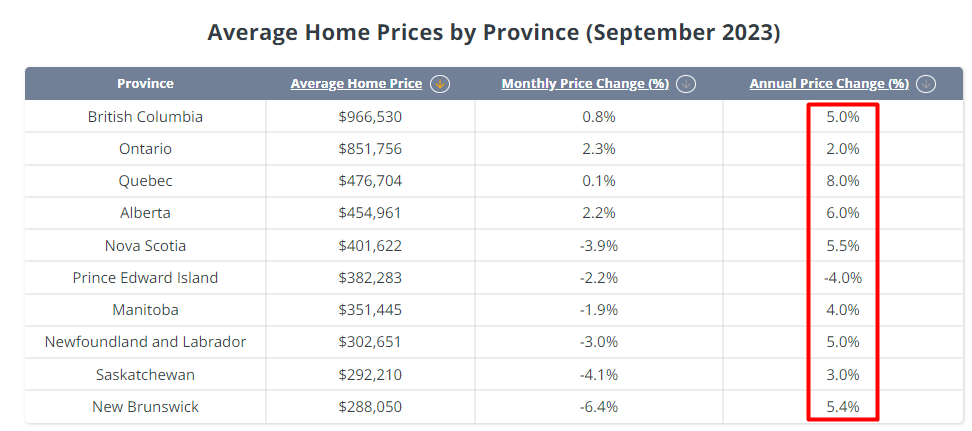
Canadian home prices are no longer climbing every year, but they remain high. As of September 2026, CREA’s National Composite MLS HPI was down 3.4% year over year1, and the national average price was $666,538, down 1.6%. Prices are falling in B.C., Alberta and Ontario and rising modestly elsewhere, so the provincial picture2 is mixed. CREA’s October 16, 2026 forecast3 expects the 2026 national average price to rise only 0.2%, to $681,681. It projects declines of 3% in Ontario and 0.8% in B.C.
Even after the 2022–2025 corrections, an average price close to $700,000 keeps direct ownership out of reach for many investors. That gap continues to drive interest in real estate crowdfunding in Canada.
However, Canadian crowdfunding legislation imposes various limitations on crowdfunding platforms. The regulations prohibit non-registered and non-licensed platforms from accessing the Canadian investment market.
What you will learn in this post:
Crowdfunding Legislation in Canada
The Canadian Securities Administrators (CSA) is a council of Canada’s provincial and territorial securities regulators. It coordinates rules such as the nationally harmonized crowdfunding registration and prospectus exemptions4. Each commission registers and supervises the portals in its own jurisdiction: the OSC in Ontario, the BCSC in British Columbia, the ASC in Alberta and the AMF in Québec.
The key rulebook for crowdfunding is National Instrument 45-110, Start-up Crowdfunding Registration and Prospectus Exemptions. The CSA published NI 45-110 in final form on June 23, 20215. It came into force on September 21, 2021, and has no expiry date. The changes6 it introduced reshaped the local crowdfunding regulations in Canada. Under NI 45-110:
- An issuer can raise up to $1.5 million in any 12-month period7 through a compliant funding portal. The old provincial blanket orders capped raises at $500,000.
- An investor can put up to $2,500 into each distribution, or up to $10,000 if a registered dealer confirms that the investment is suitable for them. The previous limit was $1,500.
- Federal and provincial co-operatives or associations can now use the startup crowdfunding prospectus exemption8.
- Portals that rely on the registration exemption must certify every six months that they have enough financial resources to keep operating for the following six months.
- Issuers must show they have operations other than the purchase of an unspecified business before they can use the startup crowdfunding prospectus exemption.
All of these measures have been binding since September 21, 2021, as the CSA’s final notice on NI 45-1105 sets out. The ASC’s instrument record shows no later amendment to the limits. For platform operators, this means start-up crowdfunding now runs on one set of numbers across the country, rather than a patchwork of provincial orders.
Overview of crowdfunding in Canada
Before a crowdfunding portal is permitted to operate in any jurisdiction, it shall meet certain conditions9 such as filing specific documents and obtaining permission to operate from the securities regulator of the jurisdiction. This is why CSA recommends researching carefully whether a portal is permitted to operate in a specific jurisdiction before investing in any deal hosted by the portal.
The Canadian crowdfunding regulation9 clearly requires a real estate crowdfunding portal to make each project state the minimum offering amount it must raise to succeed. Under NI 45-11010, the distribution must close no later than 90 days after the offering document first appears on the portal. If the issuer’s total raise falls short of that minimum, investors get their money back. Purchasers can also withdraw under the subscription agreement. Projects that don’t specify a minimum offering amount cannot be hosted on real estate crowdfunding platforms.
Legally, all real estate crowdfunding platforms issue securities: debt securities, such as bonds; equity securities, such as common or preference shares; convertible securities, such as warrants; and limited partnership units. Thus, there is no legal distinction between equity-based and debt-based real estate crowdfunding portals.
Start-up crowdfunding rules no longer differ from province to province. NI 45-110 replaced the separate blanket orders11 in Alberta, B.C., Manitoba, New Brunswick, Nova Scotia, Ontario, Québec and Saskatchewan with a single national framework. As a result, a fundraiser in one province can reach crowdfunding investors in another under the same limits. Some local differences remain for offerings made through dealers under other exemptions, such as the offering memorandum exemption. A portal also still needs registration or permission in each jurisdiction where it operates.
Top Real Estate Crowdfunding Platforms in Canada
Canada’s crowdfunding rules are now harmonised, and regulators enforce them strictly. For platforms, the main challenge today is compliance. The BCSC fined Addy $100,000 for trading about $26 million in securities without registration12 between 2018 and 2025. Addy later cited the rising complexity and cost of operating under heavier regulation as one reason it failed. These are the main platforms still active in the market.
NexusCrowd

NexusCrowd13 is one of the established players in the Canadian real estate crowdfunding market. It operates as a registered exempt market dealer in Ontario, Alberta and British Columbia only, which shows how registration works province by province.
The platform launched in 2015 and offers deals in Alberta, Ontario and British Columbia across loans, mortgage debt and equity. Its website reports 13 completed deals, $9.1 million raised and $411 million in total project value.
NexusCrowd is open only to accredited investors as defined in NI 45-106, and the minimum investment is $10,000.
The platform runs a co-investment model. Under this model, institutional partners must contribute at least 50% of a deal’s required capital14, and NexusCrowd never takes more than 50% of a deal. That structure aligns the interests of investors and institutions, but it does not remove risk. The platform itself warns that its investments are highly speculative.
BuyProperly

BuyProperly15 is a Toronto-based real estate investing platform that operates in Canada and the USA. Its fractional model lets Canadians invest in residential, commercial, redevelopment and other property types, including pre-construction, assignment and resale properties. The platform works with both accredited and non-accredited investors. Reported minimums vary: some sources cite $2,500 for Canadian deals and $500 for US properties, while a 2026 review16 cites $500. Investors should confirm the current figure with the platform.
The main benefit of BuyProperly is that it is available both on the Canadian and the US markets thus offering more diversification opportunities to investors.
The platform uses Artificial Intelligence (AI) technology in its investment process.
BuyProperly charges an annual management fee of up to 2.5% plus GST/HST17 on the investment amount. The default holding period is five years, and the platform’s internal marketplace is the only route to an early exit. Returns are not guaranteed, and recent reviews note that little public performance data is available.
Equivesto

Equivesto18 is run by Equivesto Canada Inc., a registered exempt market dealer and equity crowdfunding portal. It offers startup, small business, real estate and fund deals from CAD 10019, so real estate is one category among several. Its site reports more than 7,000 investors, over $150 million invested and more than 120 offerings. Issuers can raise up to $1.5 million through equity crowdfunding, or larger amounts under other exemptions. The portal works with both accredited and non-accredited investors.
A 2026 industry profile20 describes Equivesto as operating across all Canadian provinces and territories.
The platform doesn’t charge investors annual or trading fees, and investments there may be subject to tax benefits.
Platforms That Have Left the Market
Two platforms that featured prominently in the Canadian market until recently no longer operate independently. Both cases show what operators should plan for from day one.
Willow

Willow launched on January 31, 2022 as an OSC-registered exempt market dealer and positioned itself as a PropSharing platform. Its model split each property into 100,000 units, and an investor could own up to 10% of a single property21. On November 29, 2023, Montréal rental platform Solutions Guiker Inc. acquired Willow22 for an undisclosed price and moved all existing Willow users to Guiker.
Addy Invest
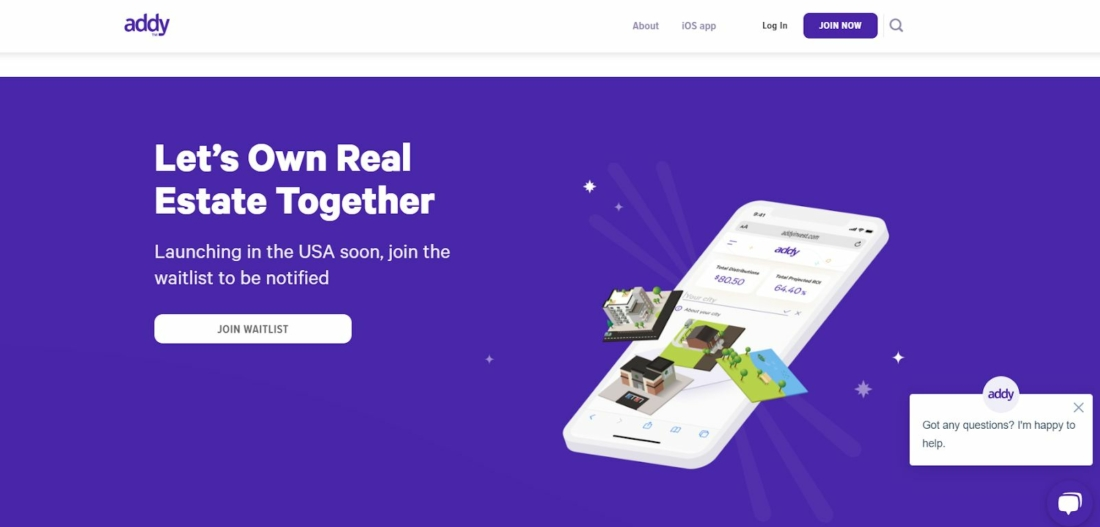
Addy Invest23 was a Vancouver-based fractional real estate platform that launched in 2018. It suspended its exempt market dealer operations in all Canadian jurisdictions as of December 31, 2025. In February 2026, Addy told investors it was insolvent24. On April 16, 2026, it filed a Notice of Intention to Make a Proposal under the Bankruptcy and Insolvency Act25 and began a stalking-horse sale process. One investor group estimates that more than $11 million is stuck in Addy deals.
How to Launch a Real Estate Crowdfunding Platform in Canada with LenderKit
With a harmonised national rulebook in place and home ownership still out of reach for many investors, Canadian real estate crowdfunding remains an interesting opportunity for investment businesses. The recent exits show that success depends on building compliance, investor reporting and capital controls into the platform from the start. White-label crowdfunding software in Canada gives you that foundation.
Check out what LenderKit has to offer. This investment software covers equity crowdfunding, P2P lending, donations and rewards-based crowdfunding, too. With LenderKit, you can build a proof of concept, launch an MVP or a full-scale investment platform for real estate crowdfunding in Canada.
To learn more about the software, pricing and how it all works, reach out to our fintech strategist for an online demo.
Article sources:
- October 16 2026 News Release | CREA Statistics
- Canadian Housing Market Report Oct. 16th, 2026 | Interactive Map - WOWA.ca
- CREA | Quarterly Forecasts
- CSA Adopt Nationally Harmonized Crowdfunding Registration and Prospectus Exemptions
- CSA Notice of Publication of National Instrument 45-110 Start-up Crowdfunding Registration and Prospectus Exemptions | OSC
- Canadian securities regulators adopt new nationally harmonized start-up crowdfunding rules
- Regulatory Instrument Details | ASC
- Startup crowdfunding prospectus exemption
- Start-up Crowdfunding FAQs
- NI 45-110
- IAS
- Vancouver Real Estate Platform Addy Restructures Business After Regulatory Fine - WestNet News
- NexusCrowd - Home
- NexusCrowd - Home
- Diversify your portfolio with alternative investments | BuyProperly
- BuyProperly Review: Honest Pros and Cons (2026) - Ark7
- Want to buy property but don't have a down payment? 'Fractional ownership' may be the ticket
- Equivesto │ Angel Investment Canada
- Raise Growth Capital — Equivesto
- Equity Crowdfunding Trends 2026: Coordinated Capital Era
- Newly launched Willow enables fractional real estate investing
- WILLOW.CA ANNOUNCES ACQUISITION BY SOLUTIONS GUIKER INC
- Addy Invest
- Real estate investment platform Addy enters restructuring one year after fine from regulators | BetaKit
- Addy Technology files NOI, advances stalking horse SISP