Wine, Whiskey, and the Crowd: The Rise of Wine Crowdfunding Platforms

No time to read? Let AI give you a quick summary of this article.


The recent acquisition of Vinovest by StartEngine1 has sent a clear signal to the market: wine and whiskey are no longer just “alternative assets” — they are now core components of the modern crowdfunding ecosystem.
The market has split into two highly successful paths that every crowdfunding platform operator should consider:
- The Fractional/Managed Model (Vinovest): High-volume, tech-driven investing where the platform handles everything — sourcing, climate-controlled storage, and insurance. This model appeals to investors looking for “liquid gold” without the logistical headache.
- The Producer-Direct Model (WineFunding): A localized approach where investors fund specific projects — like vineyard acquisitions or winery construction. This turns “investors” into “brand ambassadors” who are often repaid in the product itself.
If you are running a winery or distillery, crowdfunding is your new CAPEX strategy.
Platforms like WineFunding have proven that enthusiasts will fund your next cellar extension or organic transition in exchange for:
- Wine Pay-Back: Paying back the principal entirely in wine (often at a 15–30% discount).
- Wine Bonds: Paying back capital in cash while issuing interest in the form of annual allocations.
- Equity: Bringing in shareholders who help preserve the heritage of your estate while providing the liquidity you need to scale.
What you will learn in this post:
Why wine and whiskey became investable assets
Fine wine and whiskey act as a unique hedge because they follow a “negative supply” curve.
The Scarcity Mechanics
- Wine: Once a vintage is bottled, the supply is fixed. As bottles are consumed globally, the scarcity of the remaining stock increases, historically driving prices up regardless of standard stock market volatility.
- Whiskey: Unlike wine, which ages in the bottle, whiskey’s value is created in the cask. The “Angel’s Share” (natural evaporation) ensures that as the whiskey becomes more complex and delicious, it also becomes rarer.
Market Resilience and Recovery
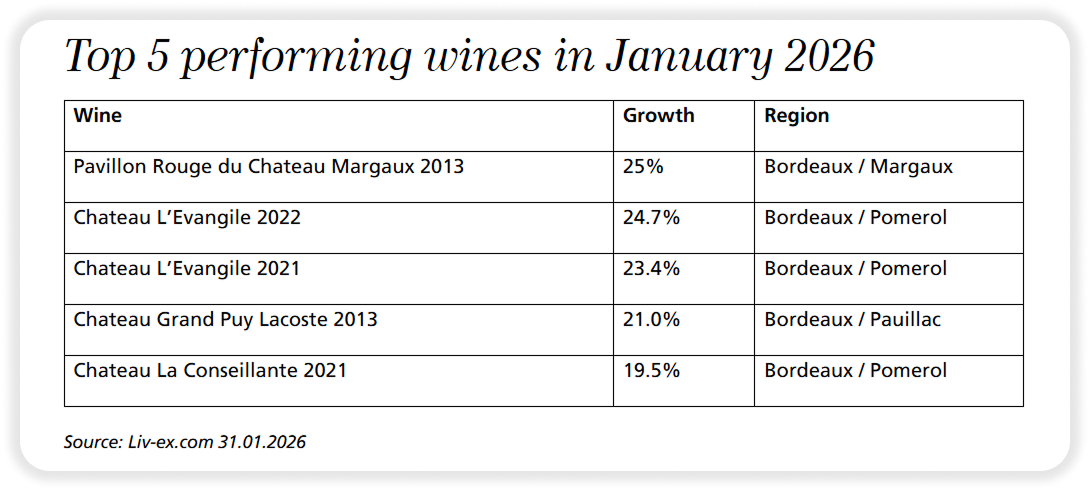
Despite a broader market dip in 2025, the start of 2026 has shown a strong recovery.
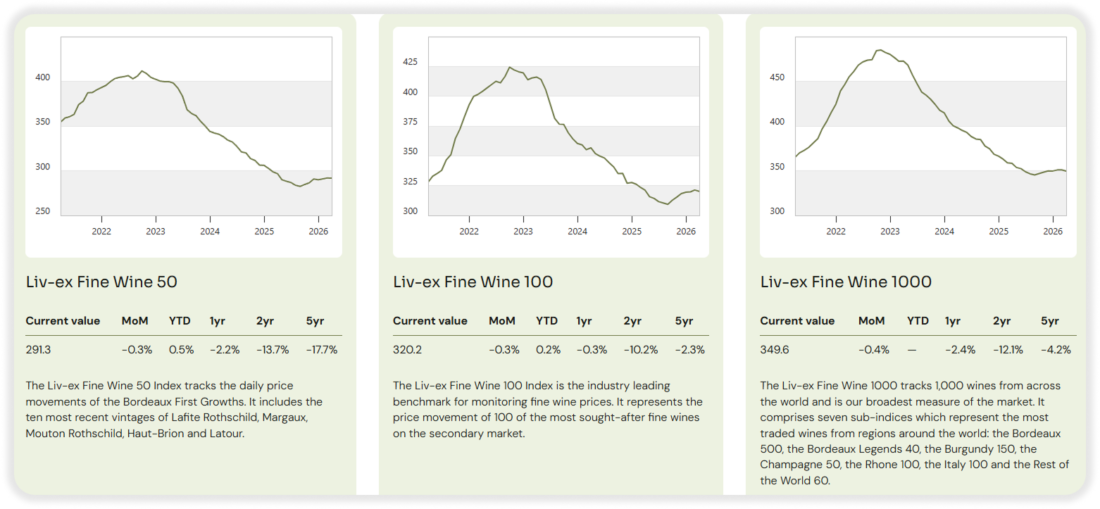
According to Liv-ex and Vin-X, “blue-chip” wines — those with the highest critical scores and strongest brand power — continue to outperform traditional commodities like gold and diamonds over long time horizons.
The barriers to entry that once kept these assets in the hands of the elite — specialized storage, auction access, and massive capital — have been dismantled by the platform economy.
Today, the asset is the same “timeless” luxury it was a century ago, but the infrastructure is now digital, scalable, and open for business.
What is wine crowdfunding?
Wine crowdfunding allows investors to pool money and access a unique niche with investment options varying from funding producers, investing in wine portfolios, buying into whiskey casks, to owning a share of specific assets.
The key difference from traditional crowdfunding is the asset itself. Wine and whiskey are physical and limited, and they can increase in value over time. Their price depends not only on business performance, but also on scarcity, aging, and demand. A well-chosen bottle or cask can gain value simply because there is less of it available.
This puts wine crowdfunding somewhere between collectibles, commodities, and private investments.
In practice, it works through three main approaches: investing in the assets themselves, funding wine businesses, or receiving wine as a return. Platforms structure these opportunities in different ways, including pooled investments, fractional ownership, and direct ownership.
Asset-backed investing
This is the most straightforward model. Investors put money into physical assets like bottles, cases, or whiskey casks. Returns come from price growth and resale over time.
There are several ways to access this model. Direct ownership gives investors exposure to specific assets, with the platform handling storage, insurance, and logistics. This approach usually requires more capital.
Fractional ownership makes entry easier by allowing investors to buy portions of assets or portfolios instead of entire holdings. This lowers the barrier to entry and makes the model more scalable.
Another key structure is the syndicate model. Here, investors pool funds into curated portfolios managed by experts. This approach reduces risk through diversification and removes the need to select individual wines, which is important in a market that requires specialized knowledge.
Business crowdfunding
In this model, investors fund wine-related businesses instead of buying the assets themselves. This can include vineyards, wineries, or wine brands. Investments are usually structured as equity or debt.
Returns depend on how the business performs. This makes the model similar to startup investing, where outcomes depend on management, operations, and market conditions rather than the value of specific bottles.
As a result, this approach carries a higher risk and less predictable timelines. However, it can also offer higher potential returns. Compared to asset-backed investing, it plays a more limited role because it removes the key advantage of wine as an asset (its scarcity) and replaces it with standard business risk.
Product-based crowdfunding
This model reflects the fact that wine is both an asset and a product. Investors provide funding and receive wine in return, usually at a discounted price or through exclusive allocations over time.
The return is not purely financial. It also comes from access and pricing advantages, and in some cases, the option to resell the wine later. This makes the model especially attractive to enthusiasts and collectors.
While it is less scalable than fractional investing, it plays an important role by connecting producers directly with their audience and offering a type of return that does not exist in most other markets.
The role of whiskey in this market
Whiskey is often grouped together with wine, but it works differently and should be viewed on its own terms. The main difference is that whiskey matures in casks, not in bottles. As it ages, its quality and value tend to increase, while evaporation, known as the “angel’s share4”, gradually reduces the total supply.
Because of this, most platforms focus on investing in whole casks rather than bottled whiskey. Once it is bottled, the aging process stops, and so does much of its growth potential. This makes whiskey a long-term, supply-driven asset, where value depends on time, storage conditions, and scarcity rather than brand cycles or new releases.
Despite their appeal, wine and whiskey investments come with clear limitations that should not be overlooked. These are tangible assets, but they are not simple or risk-free. Understanding the main risks is essential before committing capital.
- Illiquidity: These assets cannot be sold quickly. Transactions usually happen through auctions, private buyers, or platform-managed exits, which means your capital can be locked in for years.
- Pricing opacity: There is no single market price like in stocks. Valuations depend on auction results, private deals, and collector demand, which makes pricing less transparent and harder to track.
- Storage dependency: Both wine and whiskey require proper storage conditions. Poor handling can reduce or even destroy value, so investors rely heavily on platforms to manage storage and logistics.
- Market cycles: Prices are influenced by global demand, especially from major markets like the US and China. This can create cycles and periods of volatility that are not always predictable.
- Platform risk: Investors depend on the platform for sourcing, authentication, storage, and resale. If the platform underperforms at any stage, it can directly impact returns.
Taken together, these factors show that while wine and whiskey are backed by real, scarce assets, they require patience, careful platform selection, and a clear understanding of how the market works.
Wine & whiskey crowdfunding platform reviews
Here are the leaders in the wine and whiskey crowdfunding sector.
Vinovest (acquired by StartEngine)
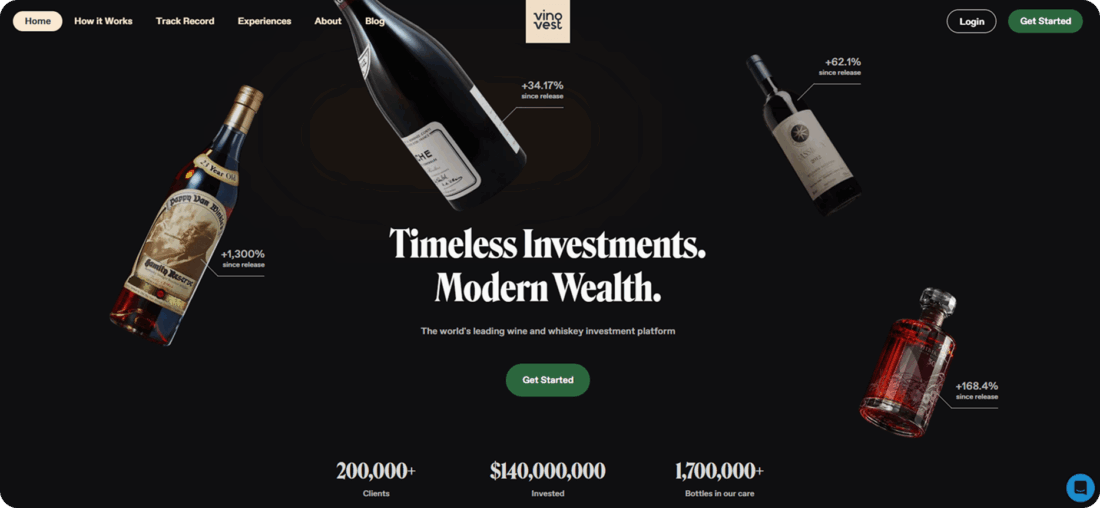
Vinovest5 is one of the most established platforms in this market. It builds and manages portfolios of wine and whiskey on behalf of investors. The platform handles sourcing, storage, insurance, and resale.
Minimum investment typically starts around $1,000. The platform focuses on asset-backed investing, primarily through managed portfolios of bottles and casks.
It is aimed at beginner to intermediate investors who want exposure to alternative assets without dealing with operational complexity.
The main advantage is simplicity. It offers a fully hands-off experience with built-in diversification. The downside is the ~2% annual management fee and limited liquidity.
WineFunding

WineFunding6 focuses on financing wine producers, rather than investing in physical assets. Investors can participate in projects involving vineyards, wineries, and wine brands.
Minimum investments vary by project but are typically a few thousand euros, depending on the structure. The platform offers equity, debt, and in-kind (wine-based) returns, covering all three core crowdfunding models.
It is aimed at investors comfortable with higher risk, including those interested in supporting wine businesses directly.
The main strength is access to real industry projects with clear documentation and due diligence. The trade-off is that returns depend on business performance, making them less predictable.
WineFi

WineFi7 represents a newer, fintech-driven approach. It enables investors to co-invest in wine portfolios through syndicates and fractional ownership, often supported by data-driven selection.
Minimum investment is typically lower than traditional models (often starting from a few hundred to low thousands), depending on the offering. The platform focuses on asset-backed investing, delivered through pooled and fractional structures.
It is aimed at younger or tech-oriented investors looking for lower entry barriers and diversified exposure.
The main advantage is accessibility and portfolio diversification. However, the platform is still developing its track record, and liquidity depends on the secondary market.
How to launch a wine and whiskey crowdfunding platform with LenderKit
Wine and whiskey investing is no longer a closed market. The demand is there, the asset class is proven, and the infrastructure gap is being filled. What remains is execution, so launching a wine crowdfunding platform is not about inventing a new model, but about applying the right structure to the right audience.
This is where LenderKit can help. The white-label crowdfunding software provides a ready framework to launch and operate a wine and whiskey investment platform.
Instead of developing everything from scratch, operators can focus on what actually matters:
- sourcing quality deals
- building partnerships with producers or suppliers
- onboarding investors
- managing and closing capital raising deals
To discuss your business model and requirements, please get in touch with us.