Best Fractional Ownership Platforms in 2026 (Compared)


No time to read? Let AI give you a quick summary of this article.


Last updated: 2026
Fractional ownership splits an expensive asset such as a property, art or a luxury watch into shares that individual investors can buy into directly, instead of needing the full purchase price or going through a fund wrapper. It’s grown because it offers bite-sized investment opportunities into big assets and makes them more accessible for the general public compared to high-net-worth or institutional investors.
This guide compares active fractional ownership platforms across real estate, vacation homes, and alternative assets. We took our old article written in 2024 and updated it to see what changed.
We added a new platform, Prypco, and verified that 3 platforms are no longer operational from our previous “Top 10 Fractional Ownership Platforms” list.
What you will learn in this post:
How we evaluated fractional ownership platforms
We assessed each platform based on:
- Asset selection — what type of asset the platform fractionalizes, and how it’s sourced
- Investment mechanism — tokenization, SPV/notes, or direct co-ownership
- Minimum investment — the entry point for a new investor
- Liquidity — whether there’s a secondary market or a fixed hold/exit process
- Transparency — reporting, dashboards, and documentation available to investors
- Geographic availability — which investors can actually use the platform
- Operating status — confirmed as of this update, not assumed from launch coverage
Comparison at a glance
| Platform | Asset Type | Launched | Country | Mechanism | Status |
| Prypco | UAE real estate | 2025 | Dubai, UAE | Fractional ownership + tokenized real estate (Mint) | Active |
| Ember | Luxury vacation homes ($1.5M–$5M) | 2021 | USA (select Western markets) | Direct co-ownership, LLC equity | Active |
| Strata | Commercial real estate | Mar 2019 | Bengaluru, India | SPV shares + convertible debentures | Active |
| Fraction | Art, real estate, mixed assets | Jan 2022 | Bangkok, Thailand | Digitized fractionalization | Active |
| Fractional | Residential co-ownership | 2021 | San Francisco, USA | Direct co-ownership | Active |
| BRXS | Real estate notes | 2021 | Amsterdam, Netherlands | Real estate notes | Active |
| RealX | Indian real estate | 2017 | India | PropChain blockchain | Active |
| Assetmonk | Commercial real estate | 2019 | India | Direct asset-backed shares | Active |
| Luxury Shares | Vacation homes | 2018 | USA | Tokenized security | Inactive |
| RealT | US residential real estate | 2019 | USA | Blockchain tokens | Litigation |
| Elephants | Luxury watches | 2022 | Switzerland | Blockchain fractionalization | Acquired |
Which platform fits which investor?
- Lowest barrier to entry: RealX ($60) and BRXS (€100) — both worth testing the model with minimal capital. Prypco’s AED 500 (~$136) minimum sits in the same range if you specifically want Dubai real estate exposure.
- Commercial real estate exposure: Strata and Assetmonk both structure deals around institutional-grade commercial property rather than residential.
- Luxury vacation-home co-ownership: Ember, if you want personal use of a $1.5M–$5M property (6+ weeks a year) alongside equity ownership — this is closer to a lifestyle purchase with investment upside than a pure income play.
- Dubai / UAE real estate: Prypco is the clearest option here, with both a fractional-ownership product (Blocks) and a tokenized-trading product (Mint) under one company.
- Broadest asset coverage: Fraction is built for fractionalizing “anything,” including art and platforms themselves, not just real estate.
- First-time fractional investors: RealX’s $60 minimum is the lowest confirmed entry point on this list.
Prypco
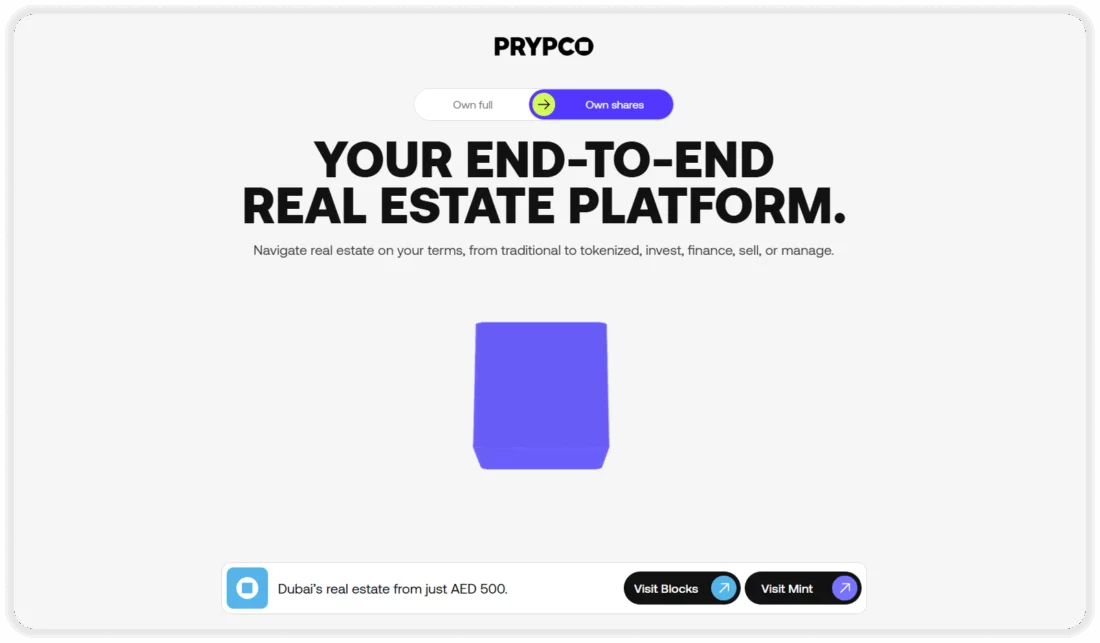
Prypco is a Dubai-based PropTech platform founded and led by CEO Amira Sajwani. It positions itself as an all-in-one digital real estate ecosystem covering investing, financing, and property management — what the company calls “Real Estate Freedom”: removing traditional financial barriers to real estate ownership.
Core products:
- Prypco Blocks — fractional ownership of Dubai real estate, with passive income starting from AED 500
- Prypco Mint — a blockchain-backed platform for buying, selling, and trading tokenized real estate
- Prypco Mortgage — fast mortgage pre-approvals and rate comparisons
- Prypco Golden Visa — eligibility checks and support for the UAE Golden Visa
- Prypco One — a tools suite for real estate agents to manage listings and referral commissions
Best for: Investors specifically targeting Dubai real estate who want both fractional ownership and a tokenized secondary-trading option from the same provider.
Asset classes: UAE residential and investment real estate.
Website: prypco.com1
Ember
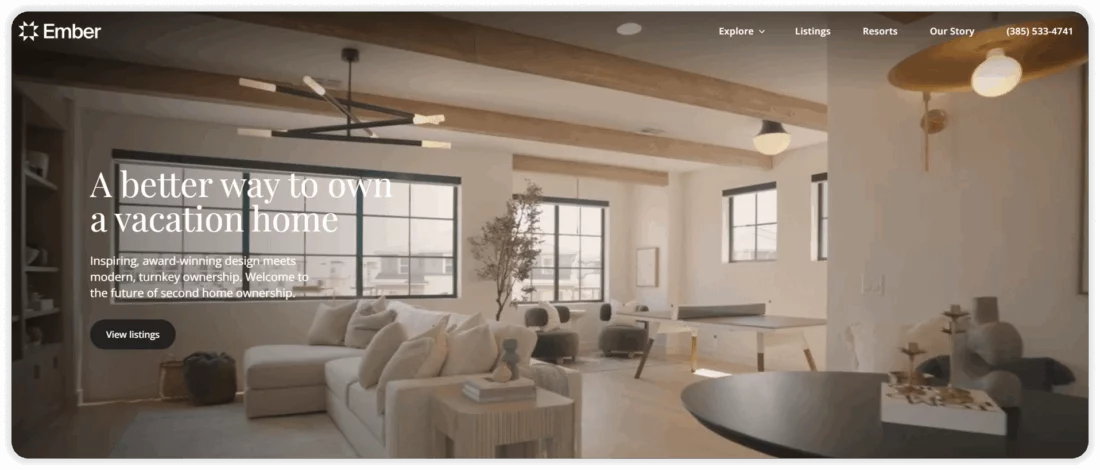
Ember is a luxury vacation-home co-ownership platform for affluent buyers, focused on premium properties priced between $1.5M and $5M. It’s built for a narrower, higher-end segment than most platforms on this list — combining property management, concierge services, and personal vacation use into one offering.
Strengths:
- Access to $1.5M–$5M vacation homes at a fraction of the full purchase cost
- Personal use rights of 6+ weeks per year
- Full-service concierge and property management provided at cost, with no markup
- Real equity ownership through an LLC structure, rather than a timeshare model
- Financing options available for share purchases
Limitations:
- Liquidity is limited — selling a property requires a 75% owner vote2
- Smaller property portfolio than larger platforms
- Not built for passive income; designed around personal use rather than investment returns
- Currently restricted to select Western US markets
Best for: High-net-worth buyers who want personal vacation access plus equity, not passive income.
Website: emberhome.com3
Strata
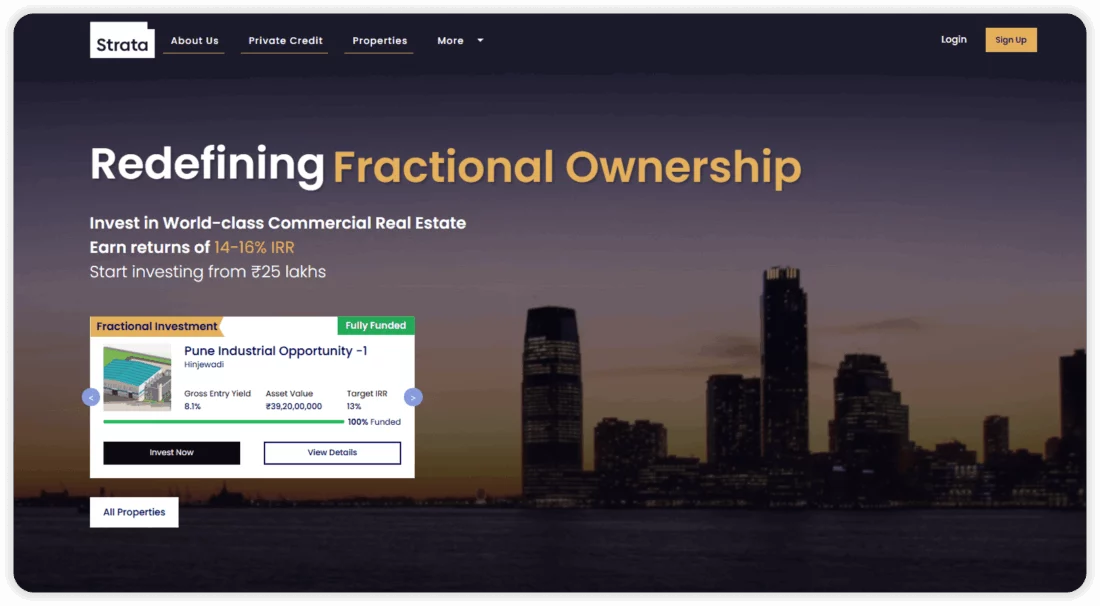
Strata is a Bengaluru, India-based fractional ownership platform launched in March 20194, focused on commercial real estate, with entry starting around $30,000 — well below the capital typically required for institutional-grade commercial property.
How it works: Strata identifies the property and creates a Special Purpose Vehicle (SPV) to acquire and later manage it. Investors buy shares and convertible debentures of the SPV. Returns are distributed monthly. When Strata identifies a profitable exit, it puts the sale to an investor vote — if 75% approve, the property is sold and proceeds are distributed proportionally.
Fees: 3% management fee, plus 20% of the return on sale.
Best for: Investors wanting commercial real estate exposure with an investor-controlled exit mechanism.
Website: strataprop.com5
Fraction
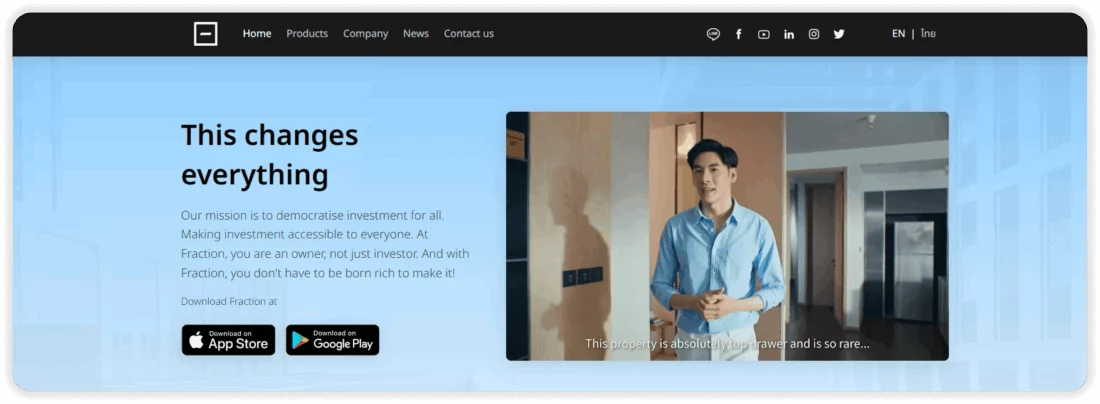
Fraction, based in Bangkok, Thailand and launched in January 2022, takes a broader approach than most platforms here — enabling fractional investment in art, real estate, or effectively any asset that can be digitized and fractionalized.
How it works: Fraction manages the full lifecycle: digitizing and fractionalizing the asset, offering fractions to investors, facilitating secondary trading among investors, and the surrounding administrative work. It also supports companies and promoters managing co-investment and pooled capital structures.
Best for: Investors or asset owners looking for fractionalization across multiple asset types, not just real estate.
Website: fraction.co6
Fractional
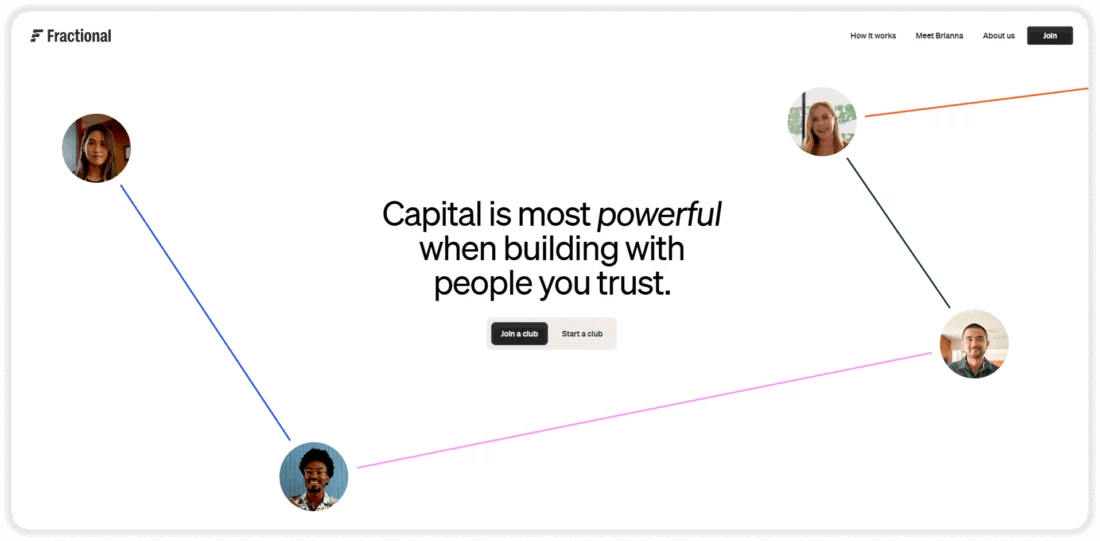
Fractional, based in San Francisco and launched in 20217, connects people who want to co-own residential property together.
How it works:
- You search for a property you want to co-own
- You submit an initial deposit and complete due diligence alongside other co-owners
- You sign a property-specific agreement, pay the remaining balance, and become a co-owner
Fractional handles all financial and legal processes and runs a secondary marketplace where co-owners can buy and sell their shares.
Best for: Groups of individuals who already want to co-own a specific property together, rather than buying into a pre-selected listing.
Website: fractional.app8
BRXS
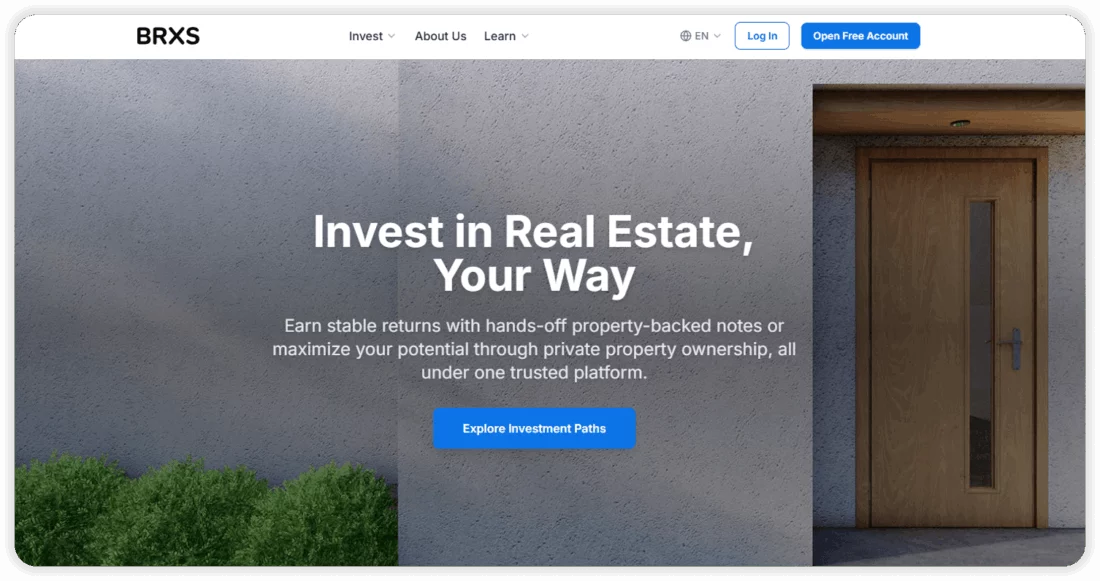
BRXS is a fractional ownership platform based in Amsterdam, Netherlands, launched in 2021, allowing investment in real estate notes starting at just €100.
How it works: Notes give investors the right to quarterly interest and repayment, plus a share of profit when the underlying property sells. BRXS handles selection, rental, and management of the properties. Fees include a transaction fee (charged when notes or the property sell), a management fee, and an offering fee — all factored into projected returns and variable by property and deal.
Best for: European investors wanting a low entry point, with income paid quarterly rather than only on exit.
Website: brxs.com9
RealX
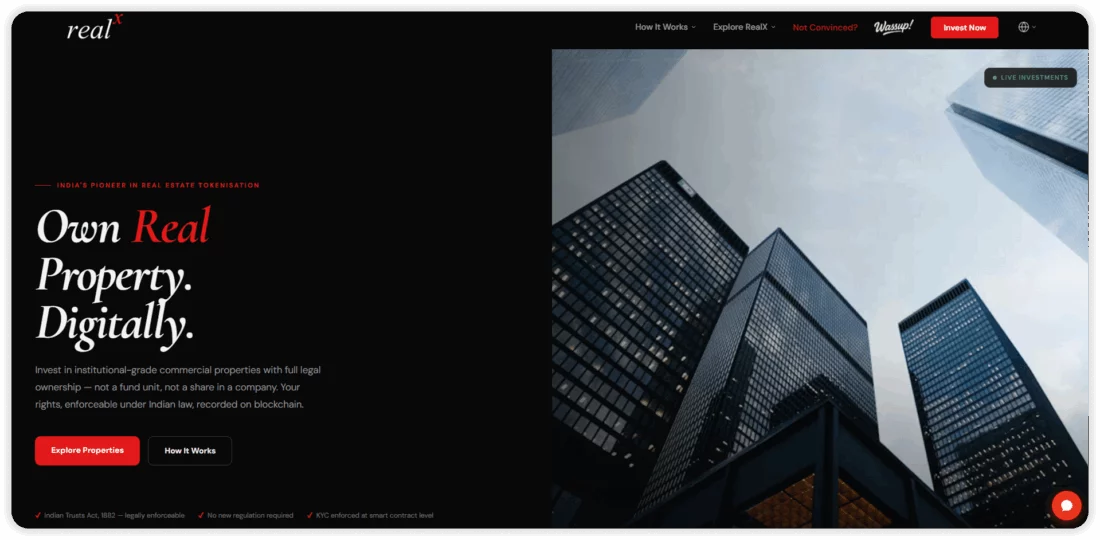
RealX is an India-based fractional real estate platform launched in 2017, built around making property investment accessible regardless of an investor’s overall wealth. It uses a proprietary blockchain (PropChain) to digitize and fractionalize real estate, with entry starting at $60.
How it works: Day-to-day property management is handled by Property Managers, who collect and distribute rent through RealX. Co-owners receive a proportional share of rental income.
Best for: First-time fractional investors wanting to test the model with minimal capital.
Website: realx.in10
Assetmonk
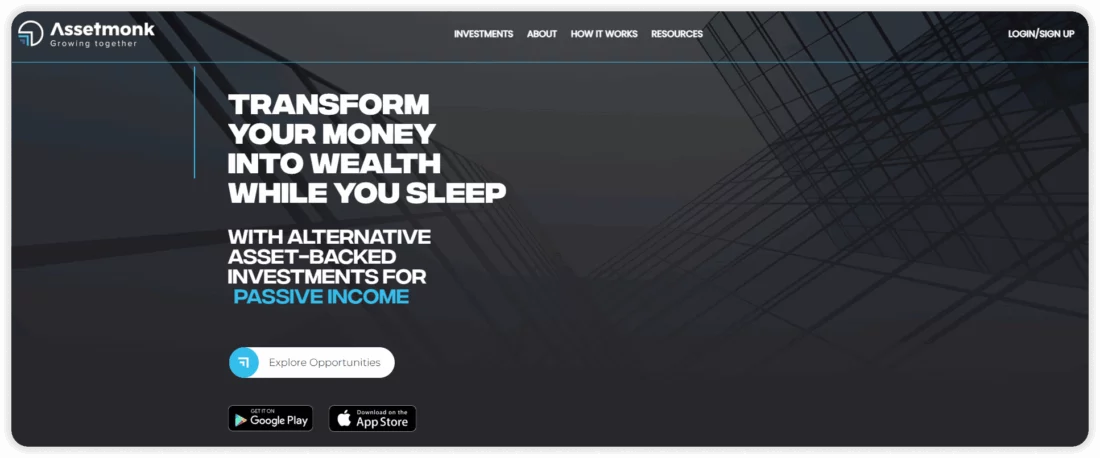
Assetmonk is an India-based fractional investment platform founded in 2019, focused on fractional ownership of top-tier commercial real estate — office spaces for institutional-grade deals, co-living and senior-living spaces, and custom solutions.
How it works: All investment opportunities are asset-backed. Investors get dashboard access to property documentation, investment performance, and cash flow statements, with returns distributed directly to their bank account.
Best for: Investors who prioritize transparency and reporting depth alongside commercial real estate exposure.
Website: assetmonk.com11
Archived: platforms no longer independently operating
We’re keeping these for reference since they still get searched by name, but none of the three are active platforms you can currently invest through.
Luxury Shares (site down)
Luxury Shares launched in 2018 in the USA as one of the first platforms built around fractions of luxury vacation-home real estate, using tokenization. The website is no longer loading, and the only remaining active presence is its LinkedIn company page12. We’re not able to confirm current operating status beyond that.
RealT (503 error, active litigation)
RealT was a blockchain-powered real estate platform launched in 2019, offering token-based fractional ownership of US property. As of this update, realt.co returns a 503 error.
Separately, in July 2025, the city of Detroit filed what officials described as their largest blight lawsuit to date against RealT (legally Real Token), alleging the company and its 165 affiliated entities neglected over 400 residential properties, leading to widespread code violations.
The city is seeking $500,000 in blight tickets and is asking the court to hold the company’s co-founders personally liable. RealT has stated it paid third parties to manage the properties and attributed the issues to them. (Source: WDET/Detroit Evening Report, July 3, 202513.)
Elephants (acquired)
Elephants was a Switzerland-based platform (announced October 2022) that fractionalized luxury watches on a blockchain. In May 2024, Splint Invest acquired all of Elephants’ assets14, including its user base and three exclusive watches. Elephants no longer operates independently; former users and anyone interested in fractional watch investing should look at Splint Invest15, which now also covers art, handbags, and wine, with a minimum investment of €50.
Risks of fractional ownership
Fractional ownership lowers the entry barrier, but it doesn’t remove the underlying risks of the asset class — and it adds a few of its own:
- Illiquidity — several platforms above depend on a fixed exit process (Ember and Strata both require a 75% owner/investor vote to sell) or a secondary market that may have limited trading volume.
- Platform and operator risk — investors are exposed to the platform’s operational stability, not just the underlying asset. RealT’s ongoing litigation with the city of Detroit over property neglect is a concrete, current example of this risk materializing, independent of how the underlying tokens perform.
- Fee drag — management fees and profit-share on exit (Strata’s 3% + 20% is the clearest disclosed example here) can meaningfully reduce net returns.
- Consolidation risk — platforms can be acquired or shut down; Elephants’ 2024 acquisition by Splint Invest and Luxury Shares’ apparent shutdown are both examples from this list alone.
- Valuation risk — for tokenized or note-based structures, the connection between the token/note price and actual asset value depends on the platform’s own valuation process.
- Regulatory variation — fractional ownership is regulated differently across the US, EU, UAE, and India; a structure that’s compliant and protected in one jurisdiction may carry different investor protections in another.
Alternatives to fractional ownership platforms
If direct fractional ownership doesn’t fit, related routes to the same asset classes include:
- REITs — publicly or privately traded real estate investment trusts, generally more liquid than direct fractional ownership but with less control over which specific property you’re exposed to.
- Real estate crowdfunding — pooled investment into specific deals or funds, similar in spirit to fractional ownership but typically structured as debt or equity in a fund rather than direct asset fractions.
- ETFs — for broad real estate or alternative-asset exposure without picking individual properties or platforms.
- Syndications — pooled investment led by a sponsor, usually requiring higher minimums and often restricted to accredited investors, in exchange for more deal-specific control than a REIT or ETF.
Looking for a ready-made solution or exloring a custom build?
Here's how we can help
FAQ
What is fractional ownership? Fractional ownership divides an asset — real estate, a watch, an art piece — into shares that individual investors can purchase directly, rather than buying the whole asset or investing through a fund.
Is fractional ownership profitable? Returns depend entirely on the platform, asset, and fee structure. Rental income, interest, and profit-on-sale are the typical return mechanisms across active platforms, but none are guaranteed, and fees (like Strata’s 3% + 20%) directly reduce net return.
How do fractional ownership platforms make money? Most combine a management fee, a transaction or offering fee, and/or a share of profit on exit — Strata and BRXS both have explicitly disclosed fee structures among active platforms here.
Is fractional ownership regulated? Regulation varies by platform and jurisdiction. Prypco, for example, is registered and regulated by Dubai’s Economy and Tourism Department. Tokenized structures may fall under securities regulation depending on the country.
Can I sell my shares? It depends on the platform’s liquidity mechanism: Fraction and Fractional both run secondary marketplaces; Strata and Ember require an investor/owner vote before a property sale; RealX and BRXS pay income through rent/interest without a stated secondary market.
What’s the difference between REITs and fractional ownership? REITs pool many properties into one tradeable security you don’t select individually; fractional ownership platforms let you choose a specific property or asset to buy into directly.
What’s the minimum investment? RealX ($60), Prypco (AED 500, ~$136), and BRXS (€100) have the lowest disclosed minimums among active platforms, while Strata requires roughly $30,000.
Are fractional ownership platforms safe? Safety depends on the platform’s regulatory status, the transparency of its reporting, and the underlying asset itself. It’s also worth checking whether a platform is still operating at all — three platforms once commonly listed in “top fractional ownership platform” roundups (Luxury Shares, RealT, Elephants) are no longer independently active, which is exactly the kind of check this guide is trying to save you from doing yourself.
If you’re reading this because you’re evaluating the fractional ownership market rather than investing directly in it, you may be here for a different reason: figuring out how these platforms are actually built.
How to Create a Fractional Ownership Platform with LenderKit
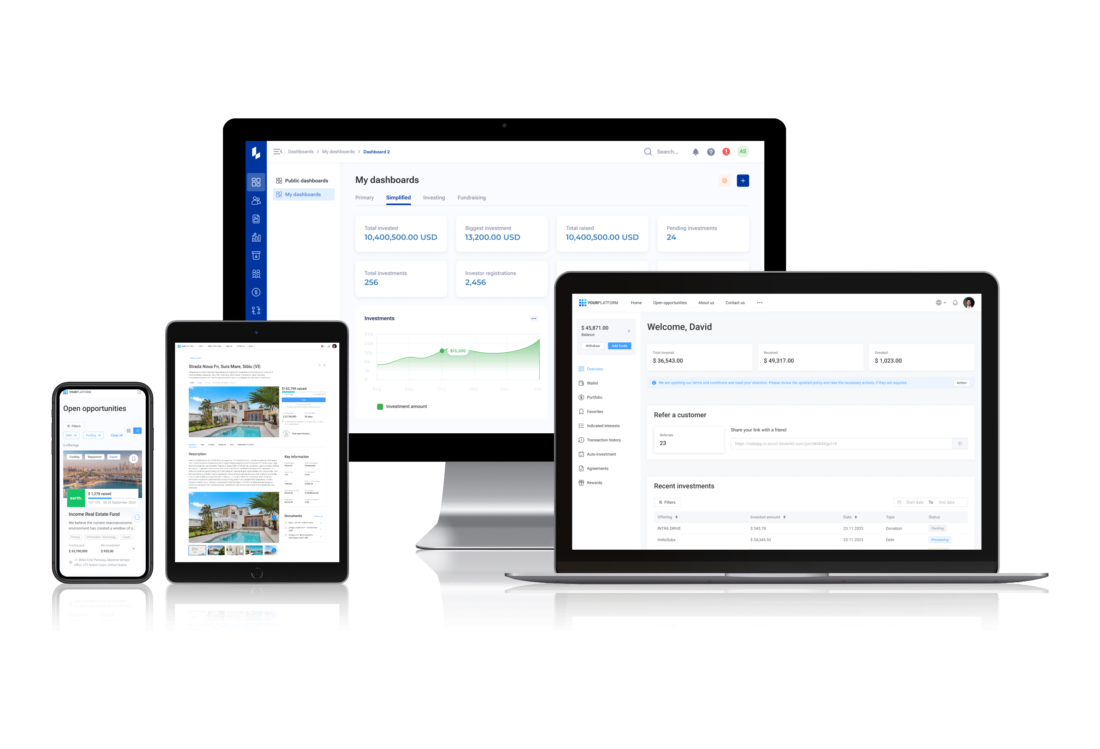
Fractional ownership is growing, and that makes now a reasonable time to consider launching your own fractional investment platform. With LenderKit’s white-label investment software, you can do it faster and more cost-efficiently than building from scratch.
LenderKit offers packages suited to both early-stage startups and established investment companies, with a feature set that supports full-cycle investing and campaign management — deals, offerings, and investors — whether you’re working alone or with a team.
If you’d like to see how it works, schedule a free demo session with us.
Article sources:
- PRYPCO | Real Estate Platform
- 5 Ember Alternatives
- Ember | A better way to own a vacation home
- Strata company information, funding & investors | The Andorra startup ecosystem
- Strata
- Fraction - Ownership Fractionalization platform
- Fractional: The place where motivated investors and entrepreneurs co-own together. | Y Combinator
- Fractional ownership of investment properties
- BRXS: Invest in Real Estate, Your Way
- RealX
- India's Leading Alternative Real Estate Investment Platform | Assetmonk
- Luxury Shares | LinkedIn
- Detroit suing blockchain-based real estate firm for neglecting hundreds of properties - WDET 101.9 FM
- Splint Invest diversifies portfolio with Elephants
- Invest in Rare & Alternative Assets - Splint Invest from €50