Top 10 Private Equity Software Platforms in 2026


No time to read? Let AI give you a quick summary of this article.


Last updated: 2026
Every PE firm eventually hits the same wall: the deal pipeline lives in one spreadsheet or CRM, capital calls live in another, and LP reporting is a quarterly scramble across email threads and cloud folders. Private equity software exists to close that gap — but the market is split across at least four different jobs (deal flow, fund accounting, portfolio monitoring, and investor onboarding), and most “best of” lists blur them together.
This guide separates them out. Below are 10 platforms worth shortlisting in 2026, what each one is actually built to do, and who it fits — followed by a comparison table you can use to narrow the list before you start demos.
What you will learn in this post:
Quick private equity software comparison
| Platform | Category | Best for |
| eFront 1(BlackRock) | Fund admin + accounting | Large managers and administrators wanting accounting, reporting and portals inside one platform |
| Allvue Systems2 | Fund accounting + portfolio | Firms with complex fund accounting who want GL, CRM and monitoring in one system |
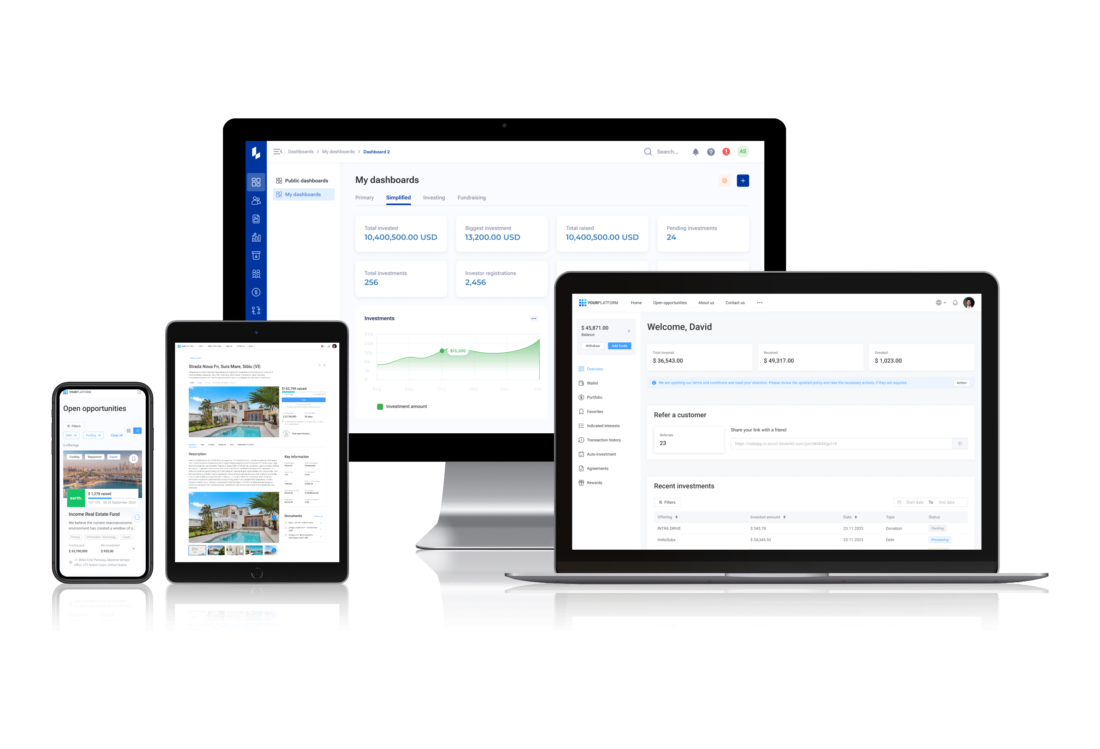
| LenderKit | White-label investment software for AIFMs and LP onboarding | Firms that want to launch and brand their own investor/fund operations platform |
| Juniper Square3 | Investment management + admin | GPs across PE, VC, private credit and real estate wanting software plus outsourced fund admin |
| Dynamo Software4 | CRM + deal + fund accounting | GPs and LPs needing configurable front-to-back-office coverage, including ESG tracking |
| Affinity5 | Relationship intelligence CRM | Deal teams whose edge is banker and intermediary relationships, not just pipeline stages |
| Carta6 | Cap table + fund admin | Emerging managers and first-time funds needing a lighter on-ramp to fund administration |
| Chronograph7 | Portfolio monitoring | Institutional PE firms standardizing KPI collection and portfolio company reporting |
| WealthBlock8 | Investor onboarding | Private market firms needing a single governed system for LP onboarding across funds |
| DealRoom9 | M&A / deal execution | Buy-side and sell-side teams managing sourcing, diligence and post-merger integration |
eFront (BlackRock)
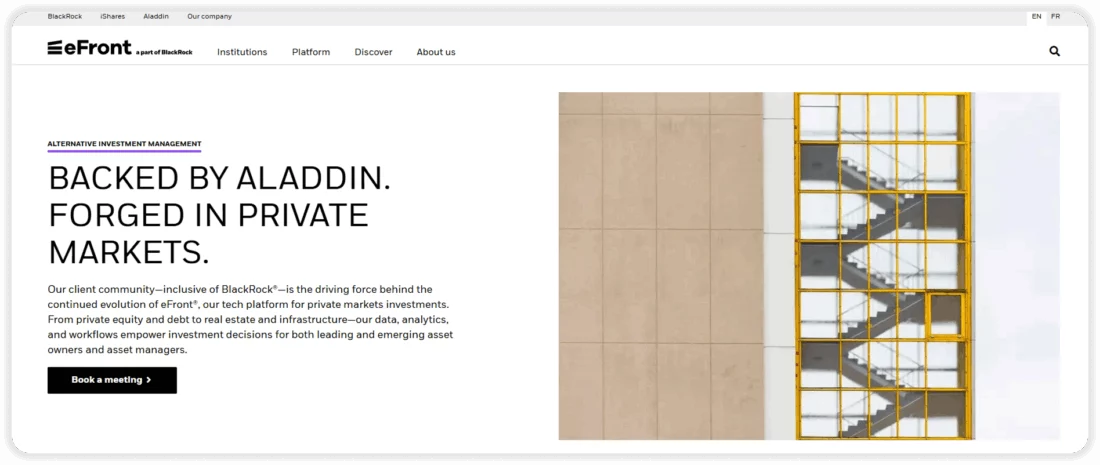
eFront became part of BlackRock in 201910, extending BlackRock’s portfolio management reach into alternative asset classes.
The platform centralizes the investment lifecycle — from fund accounting and investor reporting to portal-based LP communication — across modular products organized by asset type and investor type.
It suits managers who want one vendor covering the full back office rather than stitching together point solutions.
Allvue Systems
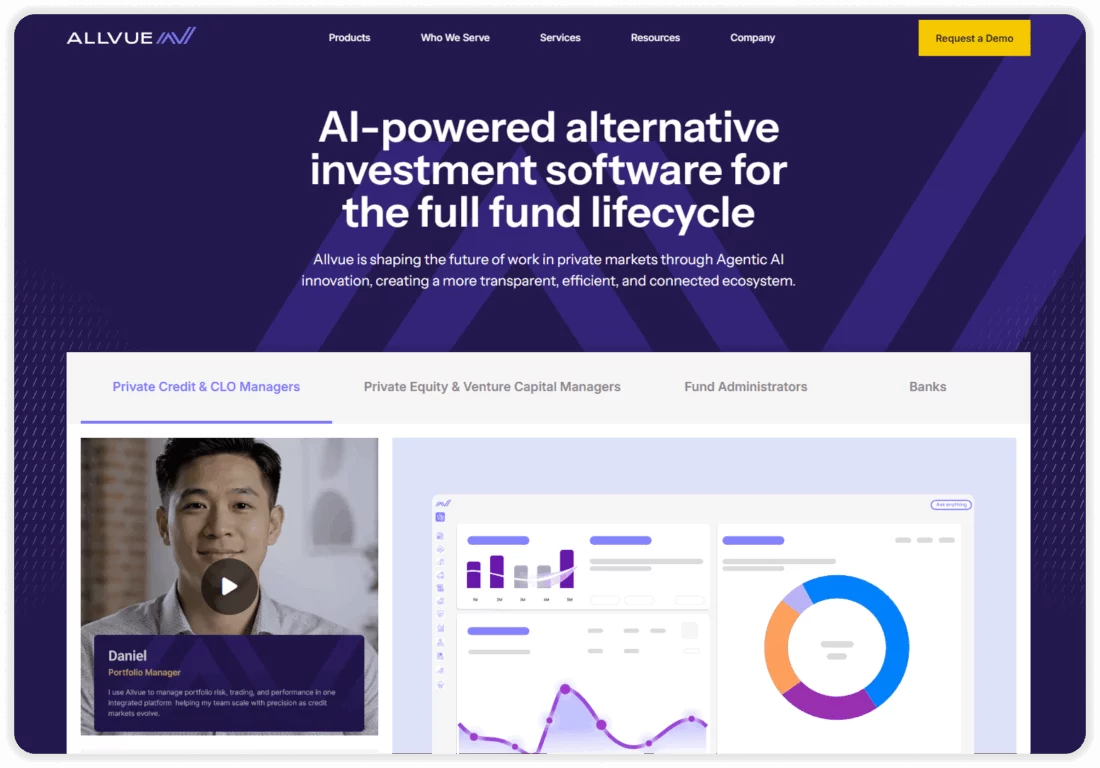
Allvue is built around the general ledger rather than bolting accounting on top of a CRM or monitoring tool.
That makes it a strong fit for private equity, private credit, and insurance-adjacent alternative managers who need multi-currency fund accounting, portfolio monitoring, and investor reporting to share the same underlying data.
The trade-off is implementation weight: smaller teams may find the setup heavier than their fund structure requires.
LenderKit
LenderKit offers white-label investment management software for AIFMs, crowdfunding platforms and alternative investment marketplaces.
Firms use it to run fund creation and management, LP onboarding and investing, portfolio performance tracking, and document signing under their own brand — across private equity, venture capital, real estate, debt, and fractional investment structures.
LenderKit supports platforms operating under SEC/FINRA, FCA, ECSPR, SAMA/CMA, and DIFC/DFSA frameworks.
It also integrates with a wide range of niche-related service providers from payment gateways like Lemonway, Secupay, Hyperpay, North Capital to identity verification providers like Jumio, Shufti Pro and others.
If you’re looking for a tailored investor operations layer, LenderKit provides the right mix of flexibility, industry knowledge and technical foundation to build your fund operations platform.
Juniper Square
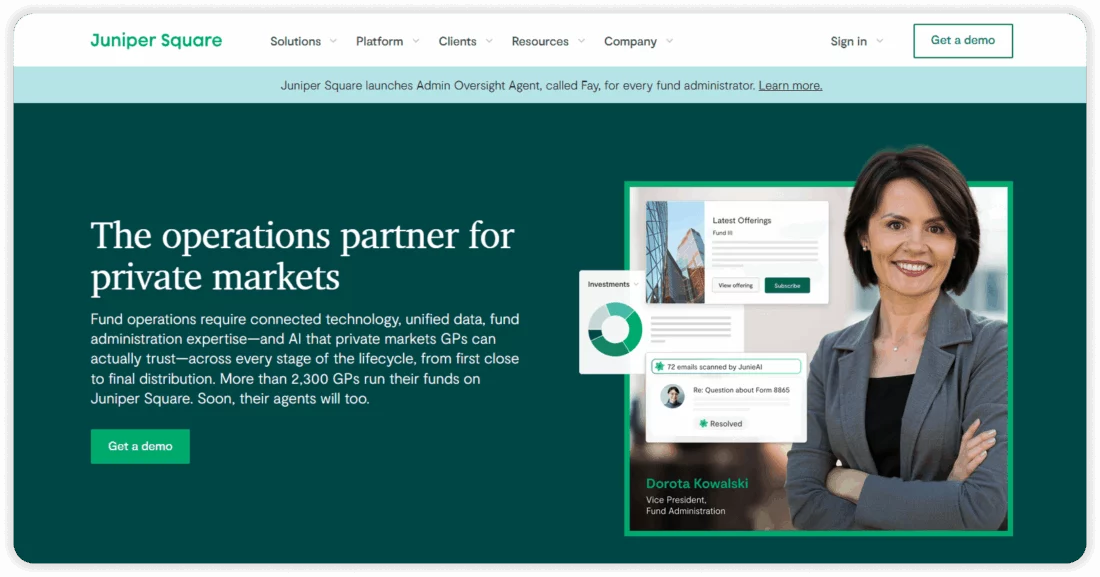
Juniper Square covers private equity, venture capital, private credit, and real estate, and pairs its software with a fund administration service for GPs without an in-house accounting team.
That combination is useful for managers who don’t want to build an operations function from scratch, though firms with asset-class-specific needs — particularly real estate — sometimes find the workflows less tailored than a single-purpose tool.
Dynamo Software
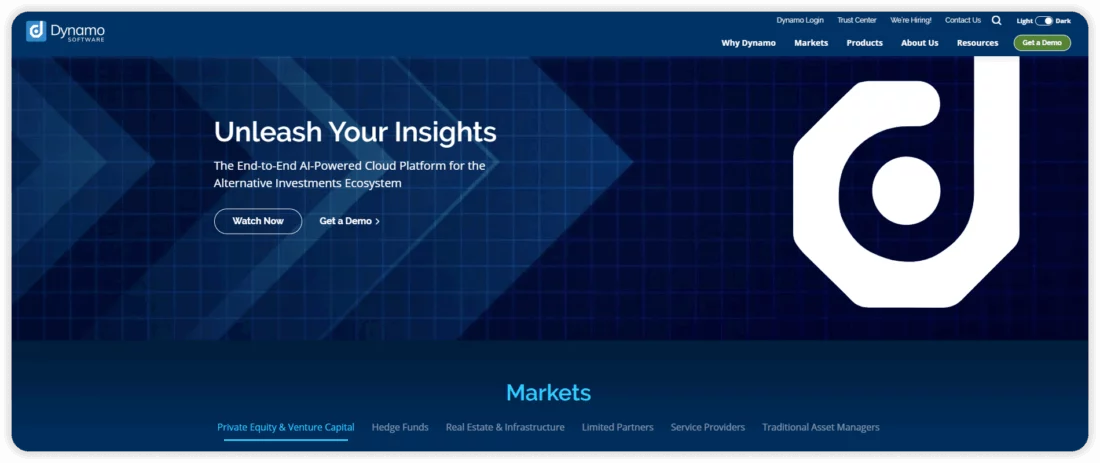
Dynamo’s suite spans CRM and deal tracking, fundraising and marketing, portfolio monitoring and valuation, fund accounting and management — with native AI modules for both GPs and LPs and built-in ESG tracking.
It’s aimed at a wide range of alternative investment participants, from private equity and venture capital to institutional allocators and fund administrators, and its configurability is the main draw for teams whose workflow doesn’t fit an off-the-shelf module.
Affinity
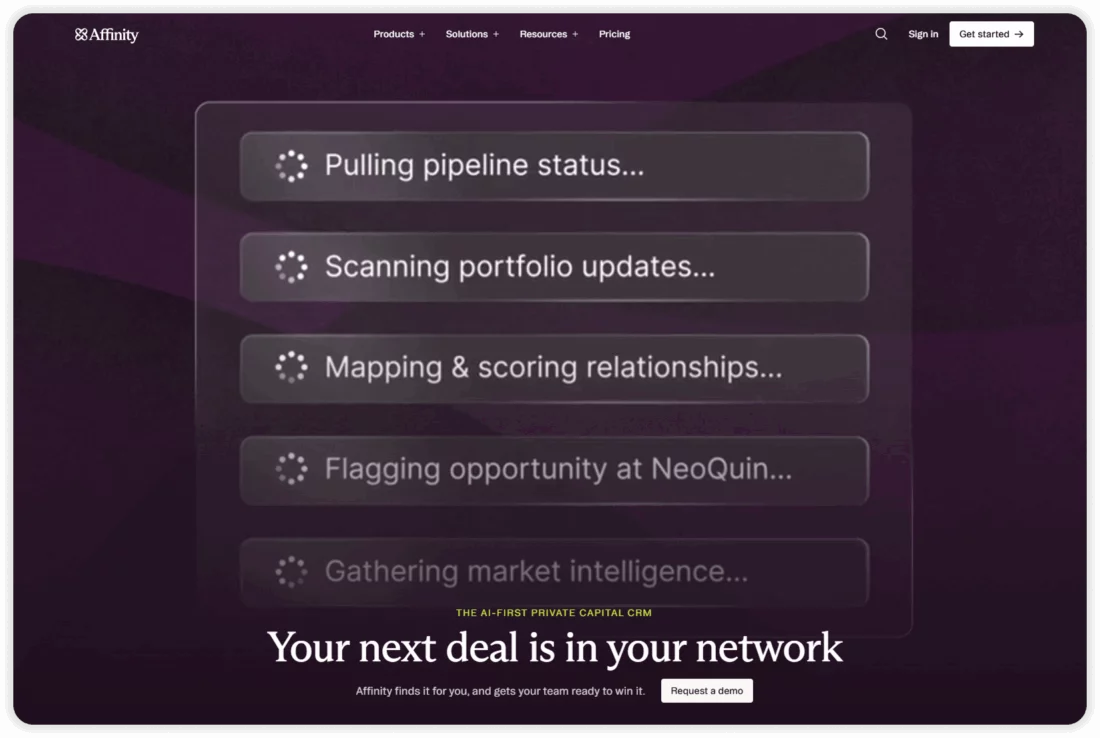
Affinity focuses on surfacing who on the team already has a relationship with a given company, banker, or intermediary — automating relationship capture rather than relying on manual CRM entry.
It’s a strong fit for firms where deal sourcing runs through a dense professional network, but the pricing model is built for scale, and smaller managers typically look at lighter alternatives first.
Carta
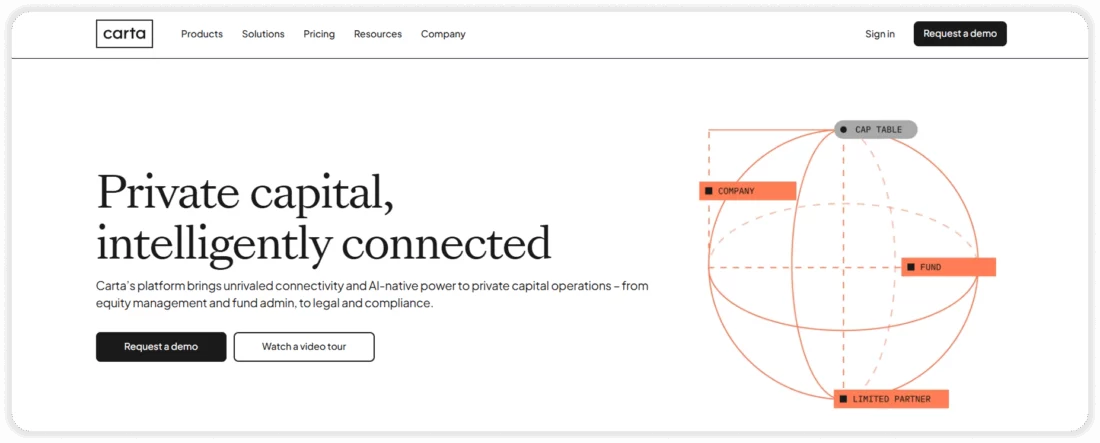
Carta is best known for cap table management, and it has extended that reach into fund administration and LP-facing tools for early-stage and emerging managers.
It’s a reasonable starting point for a fund raising its first vehicle, though firms managing multiple funds with more complex allocation structures tend to outgrow it faster than they outgrow accounting-first platforms like Allvue or FundCount.
Chronograph
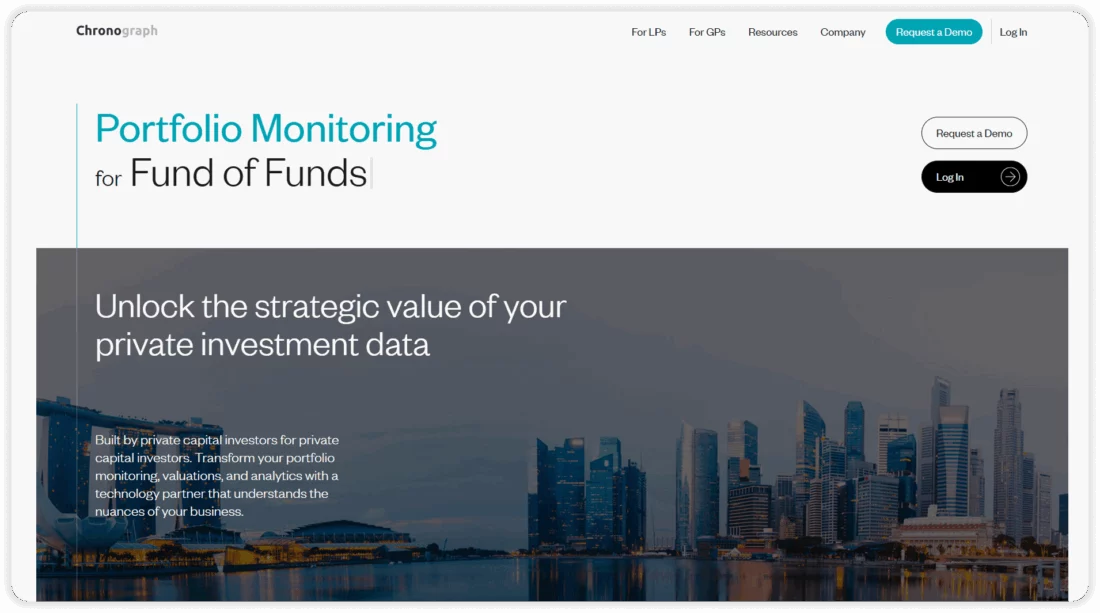
Chronograph has become one of the more consolidated choices for portfolio monitoring among institutional private equity firms — standardizing how portfolio companies report KPIs and how that data rolls up into fund-level dashboards.
It solves a narrower problem than an all-in-one suite, which is exactly the point for firms that already have accounting and CRM tools and only need monitoring to catch up.
WealthBlock

WealthBlock centers on investor onboarding and capital raising — digital subscription document signing, automated onboarding workflows, and a single source of truth for investor data that principals can extend into new funds and geographies without rebuilding their systems.
Compliance teams get audit-ready controls aligned to standards such as SOC 2, GDPR, UETA, and ESIGN. It’s an investor-operations tool first, not a deal-sourcing or fund-accounting platform.
DealRoom
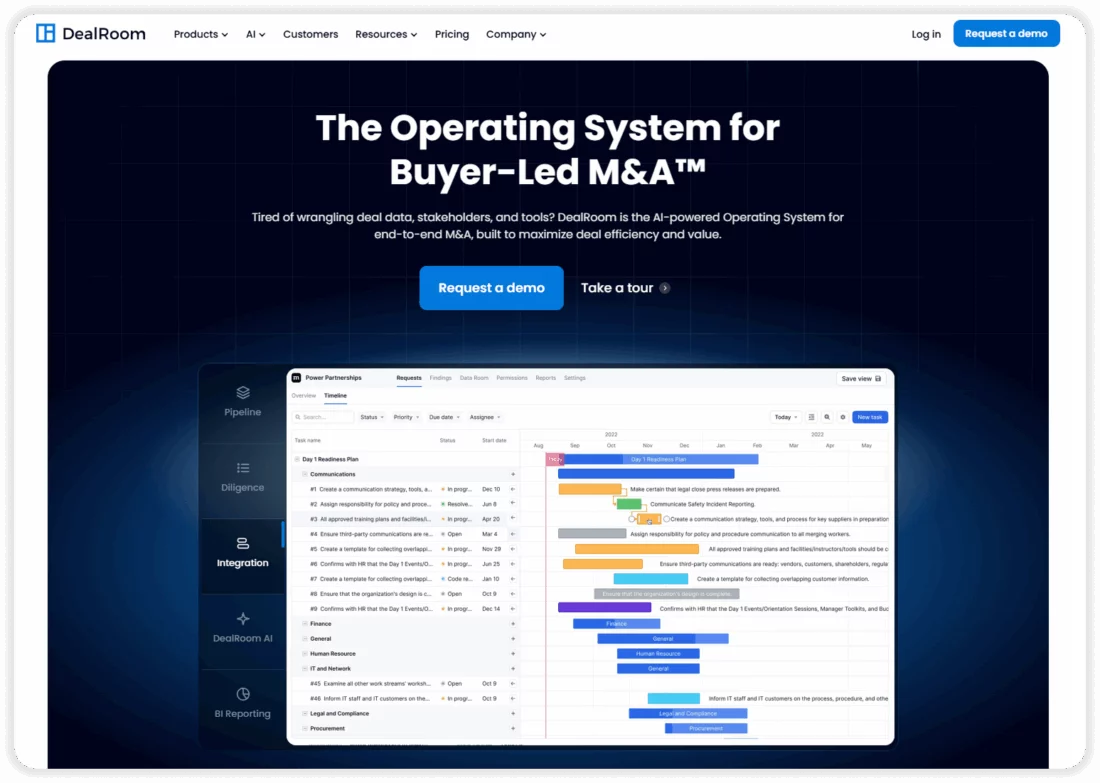
DealRoom positions itself as an “Operating System for Buyer-Led M&A,” covering the transaction lifecycle from target sourcing through virtual-data-room diligence to post-merger integration.
Its AI layer automates pipeline tracking and summarizes diligence documents, and its MCP integration lets teams connect external AI models to their deal context for research.
It’s built for transaction execution across industries such as oil & gas, biotech, and real estate — not for ongoing fund administration once a deal closes.
Looking for a ready-made solution or exloring a custom build?
Here's how we can help
FAQs
What is private equity software?
Private equity software is any platform that helps a PE or fund management team source, track, monitor, account for, and report on investments without relying on spreadsheets and email threads. Depending on the vendor, this can cover deal flow and CRM, fund accounting and LP reporting, portfolio monitoring, or the investor-facing portal a fund uses to onboard and communicate with LPs.
How do I choose private equity software?
Start with the workflow that hurts most today — deal sourcing, fund accounting, portfolio monitoring, or LP onboarding — and shortlist tools built for that specific job. Then weigh team size and AUM against implementation effort, check whether the platform needs to integrate with your existing fund administrator or accounting system, and confirm the vendor supports the jurisdictions and compliance frameworks your fund operates under.
Final thoughts
There isn’t a single “best” private equity software platform. The right choice depends on the operational challenge you’re trying to solve. Once you’ve identified your priorities, shortlist the platforms that best align with your firm’s requirements and compare them through product demos.
Before speaking with vendors, write down your:
- Firm size
- Fund size
- Capital type
- Investor types
- Internal operations team
- Outsourced vs. in-house administration
- White-label vs. custom build requirements
- Jurisdiction and regulatory requirements
- Integration requirements
- Expected implementation timeline
Having these answers prepared will help vendors understand your needs more quickly, provide more relevant recommendations, and ultimately help you select a private equity software platform that fits both your operational processes and long-term growth plans.
Article sources:
- EFront
- AI-Powered Alternative Investment Software | Allvue Systems
- Juniper Square: The fund operating system built for the agentic era.
- Dynamo Software
- Affinity: CRM for Private Capital
- Carta
- Chronograph | Portfolio Monitoring Solutions for Private Equity
- Investor Onboarding Platform - Subscription Electronic Document Signing - WealthBlock Inc. - Serving USA - Canada - UK
- DealRoom | AI-Powered M&A Operating System for Buyer-Led M&A™
- Block Rock acquires eFront