Crowdfunding in Australia: Regulations, Market Trends & Platform Setup


No time to read? Let AI give you a quick summary of this article.


Australia’s crowdfunding market has gone through the same cycle seen in many global alternative finance sectors: dozens of platforms entered the market, competition intensified, regulations became stricter, and only the stronger operators remained active.
As part of our research into the Australian crowdfunding landscape, we reviewed the current status of major platforms operating in the market. The results show a clear pattern of consolidation: established platforms continue expanding their ecosystems, while others have been acquired, closed, deregistered, or lost licensing approval.
| Platform Name | Status | Category |
| OnMarket 1 | Active | Equity Crowdfunding |
| Birchal Financial Services 2 | Active | Equity Crowdfunding |
| VentureCrowd3 | Active | Equity Crowdfunding |
| Swarmer4 (formerly crowd88) | Active | Equity Crowdfunding |
| Equitise5 | Closed in 2024 | Equity Crowdfunding |
| Enable Funding6 | Closed | Equity Crowdfunding |
| Agcrowd7 | Acquired in 2019 | Equity Crowdfunding |
| Big Start | Big Start Global8 active Big Start Australia9 – ASIC proposed to deregister | Equity Crowdfunding |
| Galaxy Crowdfunding10 | Closed / Ceased | Equity Crowdfunding |
| SME Crowdfunder11 | License canceled | Equity Crowdfunding |
| MyCause12 | Active | Pledge Crowdfunding |
| Chuffed13 | Active | Pledge Crowdfunding |
The market today shows that launching a crowdfunding platform in Australia involves much more than building a fundraising website. Modern platforms compete through compliance infrastructure, investor onboarding, automation, operational reliability, and long-term trust.
In this guide, we will look at the current Australian crowdfunding market, regulatory requirements, major industry trends, and the practical steps involved in launching a crowdfunding platform today.

What you will learn in this post:
Australian crowdfunding market trends in 2026
Australia’s fintech sector continues to create strong opportunities for alternative finance businesses. Although global investment markets have gone through periods of slowdown and recovery, interest in private investments remains active, and businesses continue looking for new ways to raise capital.
Several trends are shaping the future of crowdfunding and private capital platforms in Australia.
Where investment activity is moving in Australia
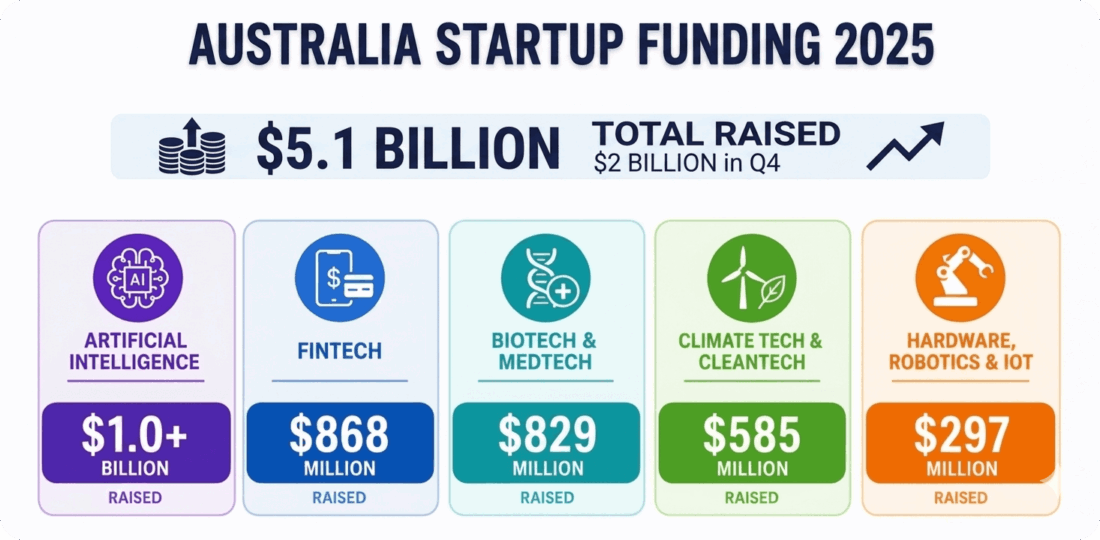
Australia’s startup ecosystem had a strong year in 2025, raising $5.1 billion across 390 deals14. Funding activity picked up significantly toward the end of the year, with nearly $2 billion raised in Q4 alone, marking the strongest quarter since 2021 and signaling renewed confidence across the market.
Several sectors attracted the largest share of investment:
- Artificial Intelligence – $1.0+ billion raised
AI became Australia’s largest funding category. Around 61% of total funding went to businesses using AI somewhere in their technology stack, showing how deeply AI is becoming integrated across industries. - Fintech – $868 million raised
Fintech remained one of Australia’s strongest sectors, with continued investor interest in cross-border payments, embedded finance, and financial infrastructure. - Biotech and Medtech – $829 million raised
Life sciences and medical technology businesses continued attracting substantial funding, supported by Australia’s strong healthcare and research ecosystem. - Climate Tech and Cleantech – $585 million raised
Sustainability-focused businesses, energy technologies, and climate solutions remained active investment categories throughout the year. - Hardware, Robotics, and IoT – $297 million raised
Investor interest also increased in robotics, industrial technologies, and automation-focused businesses.
These funding trends matter for crowdfunding platforms because investor interest often follows broader market activity. Understanding where capital is moving can help platforms position themselves more effectively and attract projects that align with current demand.
Australia’s regulatory framework
In the early days, Australian crowdfunding platforms operated in a relatively new and loosely defined environment. Now, the country has a much more mature framework. As crowdfunding and private investing have grown, regulations have evolved, too.
The role of ASIC
The Australian Securities and Investments Commission15 is the main regulator overseeing fundraising activity and financial services in Australia.
For crowdfunding platforms and private capital businesses, ASIC oversees several important areas, including:
- Fundraising structures
- Licensing requirements
- Disclosure obligations
- Investor protections
- Intermediary responsibilities
- Operational controls
Regulation today goes far beyond reviewing financial products themselves. ASIC increasingly looks at how platforms operate behind the scenes and whether businesses have the systems and resources needed to meet their responsibilities over time.
As a result, technology and compliance are becoming closely connected. Decisions around onboarding, reporting systems, investor management, and internal workflows can all have regulatory implications.
Understanding Australia’s Crowd-Sourced Funding framework
Australia introduced its Crowd-Sourced Funding (CSF)16 framework to make fundraising more accessible for startups and growing businesses while keeping investor protections in place. The framework was first launched in 2017 and was later expanded to allow eligible proprietary companies to participate.
Under the current framework17, eligible companies can:
- raise up to AUD 5 million within a 12-month period
- access funding through an approved intermediary platform
- offer ordinary shares under the CSF regime
To qualify, companies generally must:
- Have less than AUD 25 million in annual turnover and gross assets
- Be an eligible public or proprietary company
- Operate primarily in Australia.
Companies using the framework may also face additional obligations. For example, eligible proprietary companies are generally expected to maintain at least two directors, prepare annual financial and directors’ reports, and comply with existing governance requirements.
Additional audit obligations may also apply. Once a business raises AUD 3 million or more through CSF offers, audited financial statements become mandatory.
The framework made fundraising more accessible, but it also introduced important responsibilities for platforms. Today’s crowdfunding businesses increasingly operate as regulated financial infrastructure rather than simple websites listing fundraising campaigns. This is why they are responsible for:
- Reviewing whether offerings meet eligibility requirements
- Presenting disclosure information
- Displaying investment risk warnings
- Maintaining investor protections
- Monitoring compliance obligations
This is one of the biggest differences between a crowdfunding platform and a regular online marketplace.
Retail and sophisticated investors
Australian regulations distinguish between retail investors and sophisticated investors, and this distinction directly affects how platforms operate.
Retail investors receive additional protections because they may have less investing experience.
Under the CSF framework, protections for retail investors include:
- An AUD 10,000 annual investment cap per company
- A five-day cooling-off period after investing
- Required risk warnings and disclosure information
Because of these requirements, many platforms now build onboarding systems that include:
- Suitability questionnaires
- Investor education materials
- Disclosure workflows
- Investment limitations
- Acknowledgment steps
Sophisticated investors qualify under separate criteria related to income, assets, or investing experience.
As platforms grow, investor classification increasingly becomes an automated process integrated directly into onboarding.
Licensing requirements and AFSL considerations
The licensing requirements and process are straightforward. Business owners just need to register on the ASIC licensing portal18 and proceed with the application.
Registration itself is relatively straightforward. Filing Form 20119 with ASIC typically costs around AUD 611 for a standard proprietary company registration20, with ongoing annual review fees afterward.
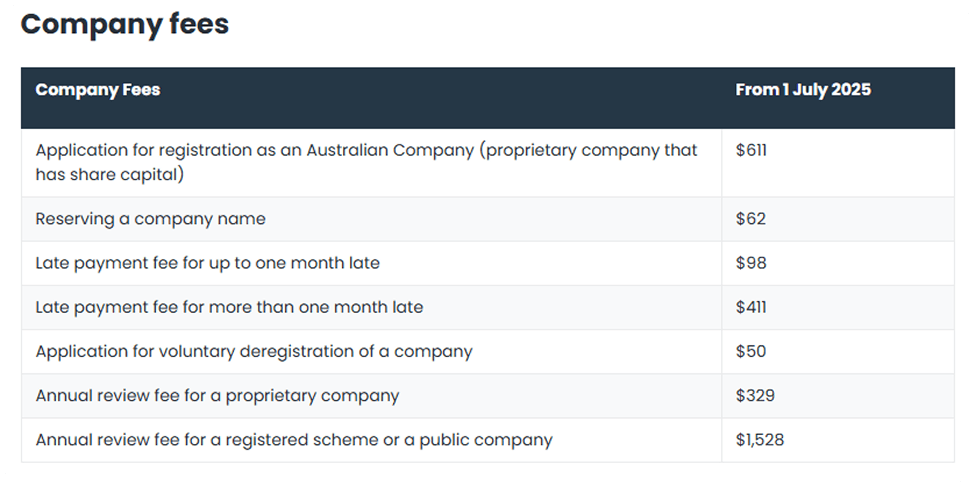
However, registration fees are usually one of the smallest setup expenses. Legal advice, licensing preparation, compliance infrastructure, cybersecurity, and ongoing reporting often create higher costs.
One can also use the assistance of Innovation Hub’s specialists.
Under Australian law, providing crowd-sourced funding services is considered a financial service. This means intermediaries generally need authorization through an Australian Financial Services Licence (AFSL).
Regulators assess whether businesses have the systems and resources needed to operate responsibly over time.
Areas commonly reviewed include:
- Organizational competence
- Internal controls
- Risk management systems
- Financial resources
- Technology capabilities
- Dispute resolution procedures
- Compliance frameworks
Platforms handling client assets may also face financial resource requirements. For example, operators holding AUD 100,000 or more in client assets may need to maintain at least AUD 50,000 in surplus liquid funds.
Businesses serving retail investors may also need compensation arrangements as well as internal and external dispute resolution systems.
Leading crowdfunding platforms in Australia
Regulation defines how crowdfunding platforms operate, but the market itself shows how these rules work in practice. Modern platforms increasingly combine fundraising tools with investor onboarding, compliance processes, and digital investment infrastructure.
Birchal

Birchal has become one of Australia’s best-known crowd-sourced funding platforms. It operates under the country’s CSF framework and offers investment opportunities to both retail and sophisticated investors. Investment minimums vary by campaign, with many raises starting around AUD 250–500, depending on the company.
OnMarket

OnMarket operates as a broader investment marketplace offering access to both public and private market opportunities. Many equity crowdfunding campaigns begin from around AUD 50, while some offerings require higher minimums. Beyond crowdfunding, the platform also supports IPOs, placements, and other capital-raising activities.
VentureCrowd

VentureCrowd has expanded beyond startup fundraising into property and alternative investments, reflecting a broader market trend where platforms increasingly diversify beyond a single fundraising category to serve wider private market investment demand.
Billfolda

Billfolda is an Australian equity crowdfunding platform. It focuses on startup and early-stage fundraising under the country’s CSF framework. The platform connects retail and sophisticated investors with private companies across sectors such as technology, healthcare, and digital services, with some investment opportunities starting from around AUD 250.
Swarmer

Swarmer focuses on equity crowdfunding for Australian startups and emerging businesses raising capital under the country’s CSF regime. The platform features companies from sectors including sustainability, wellness, biotech, and food innovation, while allowing both retail and sophisticated investors to participate in campaigns, with minimum investments in some raises starting from approximately AUD 100–250.
mycause

mycause is one of Australia’s largest online fundraising and donation platforms. It focuses on charitable campaigns, personal causes, nonprofits, schools, and community fundraising rather than equity investment. Operating since 2009, the platform supports peer-to-peer fundraising, donation campaigns, and crowdfunding pages across Australia.
Chuffed

Chuffed.org is a crowdfunding platform focused on social impact, charitable causes, activism, and community fundraising rather than equity investment. Since launching in 2013, the platform has supported tens of thousands of campaigns globally using a zero-platform-fee model, where campaigns keep donations while supporters can optionally leave tips to support the platform.
Looking for a ready-made solution or exloring a custom build?
Here's how we can help
How to launch a crowdfunding platform in Australia with LenderKit
After reviewing the market, regulations, and operational requirements, one thing becomes clear: launching a crowdfunding platform in Australia is no longer just a technology project. Building from scratch means dealing with licensing preparation, onboarding flows, KYC and AML infrastructure, investor management, reporting systems, payment integrations, and long-term compliance requirements.
That is why many operators increasingly choose white-label infrastructure instead of starting from zero.
This is where LenderKit fits naturally into the Australian market. It offers white-label crowdfunding and investment platform software built specifically for fundraising businesses. These solutions include everything that modern crowdfunding businesses typically need:
- Investor onboarding and verification workflows
- KYC and AML integrations
- Investor portals and dashboards
- Fundraising and deal management tools
- Payment and transaction tracking
- Administrative back-office tools
- Reporting workflows
- API integrations and customization capabilities
- Secondary market functionality for selected models
Building all of these systems independently can significantly increase development time, operational complexity, and launch costs.
White-label infrastructure helps reduce that burden. Rather than assembling multiple third-party tools and custom workflows, operators can launch with a platform architecture already designed around fundraising operations and adapt it to their specific business model.
To find out details or discuss options, please contact us.

Article sources:
- Equity Crowdfunding & IPOs | Invest with Impact - OnMarket
- Birchal
- VentureCrowd
- Swarmer
- Just a moment...
- Enable Funding - 2026 Company Profile, Team & Competitors - Tracxn
- AgCrowd (Acquired in 2019) | LinkedIn
- Big Start Global — Global Trade & Logistics Solutions
- Notice Details
- ASIC Professional Registers Search Details
- 25-075MR ASIC cancels AFS licence of SME Crowdfunder Pty Ltd | ASIC
- Mycause - #1 Crowdfunding & Online Fundraising Site in Australia
- Australia | Non-profit charity and social enterprise fundraising
- State of Australian Startup Funding 2025: $5.48 Billion Raised Across 390 Deals
- ASIC Home | ASIC
- Crowd-sourced funding | ASIC
- RG 104 AFS licensing: Meeting the general obligations | ASIC
- AFS licensees | ASIC
- 201 Application for registration as an Australian company | ASIC
- Fee indexation | ASIC