What Is a Money Market Fund and How Is It Administered?


No time to read? Let AI give you a quick summary of this article.


Managing cash efficiently is an important part of investing, whether you’re overseeing a large institutional portfolio or simply looking for a place to keep funds before putting them to work.
Investors often want their cash to stay easily accessible while earning a return instead of sitting idle. That’s where money market funds (MMFs)1 can help.
In this article, we’ll look at what money market funds are, how they work, and the key administrative processes that keep them operating efficiently.
What you will learn in this post:
What is a money market fund?
A money market fund (MMF) is a type of mutual fund that invests in highly liquid, short-term debt instruments such as U.S. Treasury bills, commercial paper, certificates of deposit, repurchase agreements, and other high-quality money market securities.
Unlike bank savings accounts, money market funds are investment products and are not insured by the FDIC2.
However, they are subject to strict regulations3 intended to maintain liquidity and preserve capital.
For example, U.S. rules require funds to invest only in high-quality, short-term securities, keep at least 10% of their assets available as daily liquid assets and 30% as weekly liquid assets, and follow strict limits on portfolio maturity and credit risk.
These rules are designed to help funds meet redemption requests even during periods of market stress.
Institutional investors often use money market funds to manage operating cash, while businesses may temporarily invest excess working capital before it is needed.
Individual investors also use MMFs as a place to hold cash between investments or while waiting for market opportunities.
How money market funds work
Money market funds generate income by investing in a portfolio of high-quality, short-term debt securities issued by governments, financial institutions, and corporations.
Typical investments4 include:
- U.S. Treasury bills
- Commercial paper
- Certificates of deposit
- Repurchase agreements (repos)
These investments typically mature in less than one year5, and many mature within just a few weeks or months. The fund regularly reinvests the proceeds into new securities. This constant cycle helps the fund generate income while keeping most of its assets readily available if investors decide to withdraw their money.
Stable NAV objective
One of the reasons money market funds are popular for cash management is that many aim to keep their Net Asset Value (NAV) stable at $1.00 per share. This means that, unlike most mutual funds, the value of an investor’s shares typically doesn’t fluctuate from day to day.
To maintain this stability, money market funds must follow strict rules on the quality, maturity, and liquidity of the securities they invest in. These requirements help reduce risk and support the fund’s ability to meet redemption requests while keeping the share price stable.
Not all money market funds work this way. Institutional prime money market funds, for example, generally use a floating NAV, meaning their share price can move slightly as market values change.
Subscriptions and redemptions
Investors purchase shares by subscribing to the fund. Their investment is converted into shares based on the current NAV.
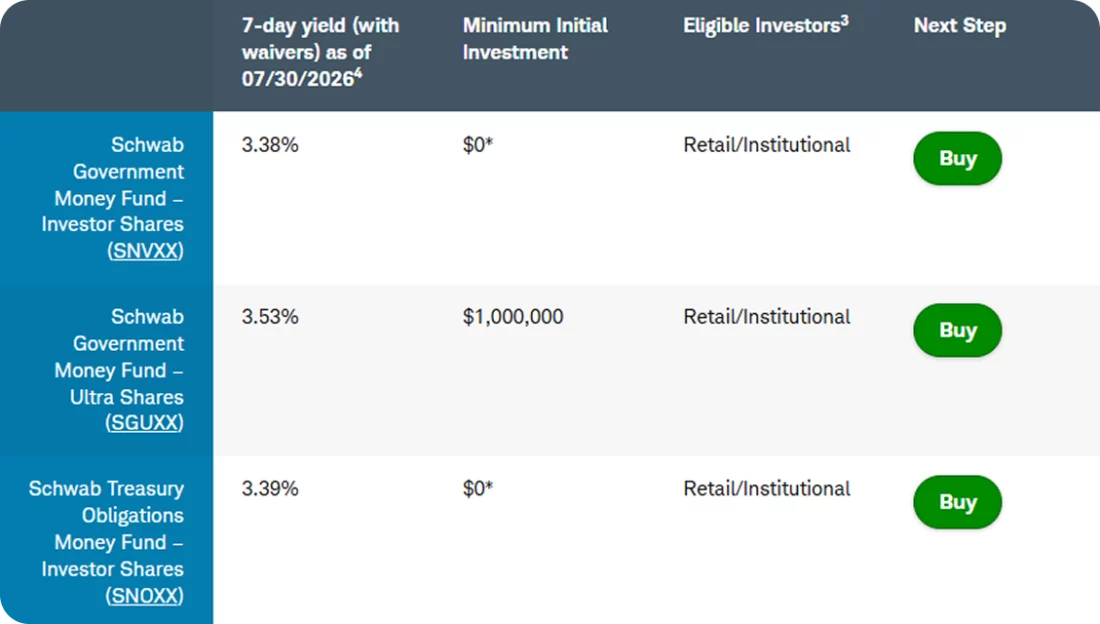
When investors need access to their money, they submit redemption requests. One of the primary advantages of money market funds is that these requests are generally processed quickly, allowing investors to access cash with minimal delay.
Because subscriptions and redemptions occur continuously, administrators must accurately process large transaction volumes while ensuring sufficient liquidity remains available.
Main participants in an MMF
Administering a money market fund requires coordination among several specialized service providers.
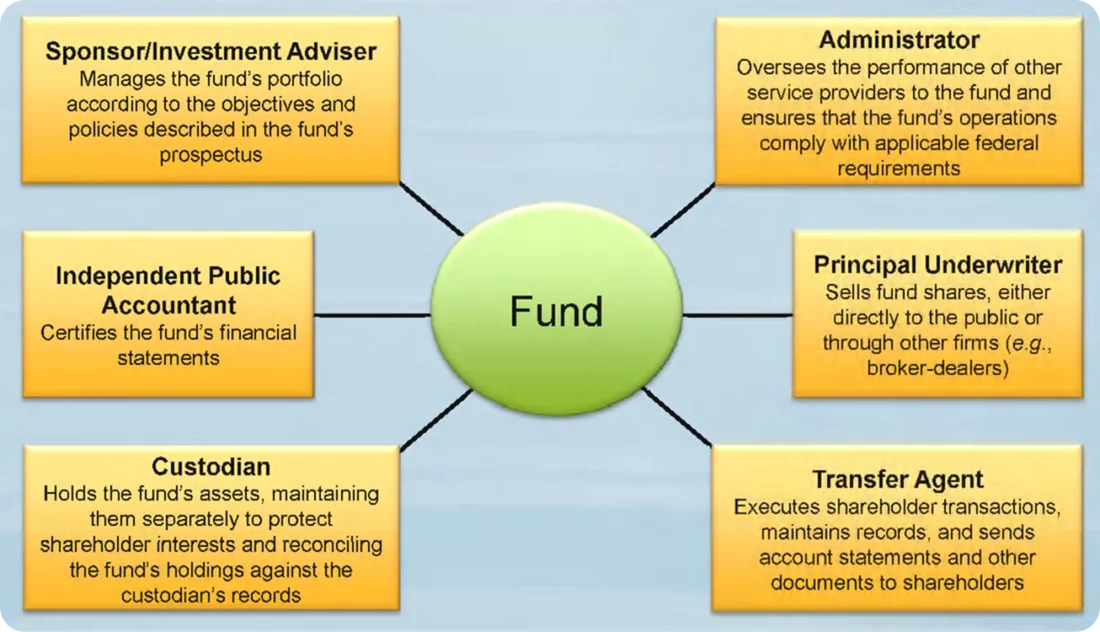
Source: https://www.federalreserve.gov/newsevents/rr-commpublic/ici_meeting_20110104.pdf6
Sponsor / Investment adviser (Fund manager)
Develops the fund’s investment strategy and manages the portfolio. The fund manager selects investments, monitors market conditions, manages liquidity and risk, and ensures the portfolio aligns with the fund’s objectives.
Administrator
Oversees the fund’s daily operations. This includes calculating the Net Asset Value (NAV), maintaining accounting records, preparing reports, and coordinating with other service providers to ensure regulatory compliance.
Principal underwriter (Distributor)
Distributes the fund’s shares to investors, either directly or through financial intermediaries such as banks, brokers, or investment advisers.
Transfer Agent
Maintains shareholder records and processes investor transactions, including account openings, subscriptions, redemptions, and ownership updates. The transfer agent also provides account statements and other investor communications.
Custodian
Safeguards the fund’s cash and securities, settles trades, collects income from portfolio investments, and keeps accurate records of the fund’s assets.
Independent public accountant (External auditor)
Conducts an independent audit of the fund’s financial statements to verify their accuracy and ensure they comply with applicable accounting standards.
Core administrative processes: What a modern MMF platform shall support
Managing a money market fund involves much more than selecting investments.
Behind the scenes, administrators process investor transactions, calculate the fund’s value, maintain records, monitor compliance, and prepare regulatory reports.
Trying to manage these activities manually quickly becomes inefficient as the fund grows, which is why many asset managers rely on integrated fund administration platforms.
Investor onboarding and compliance
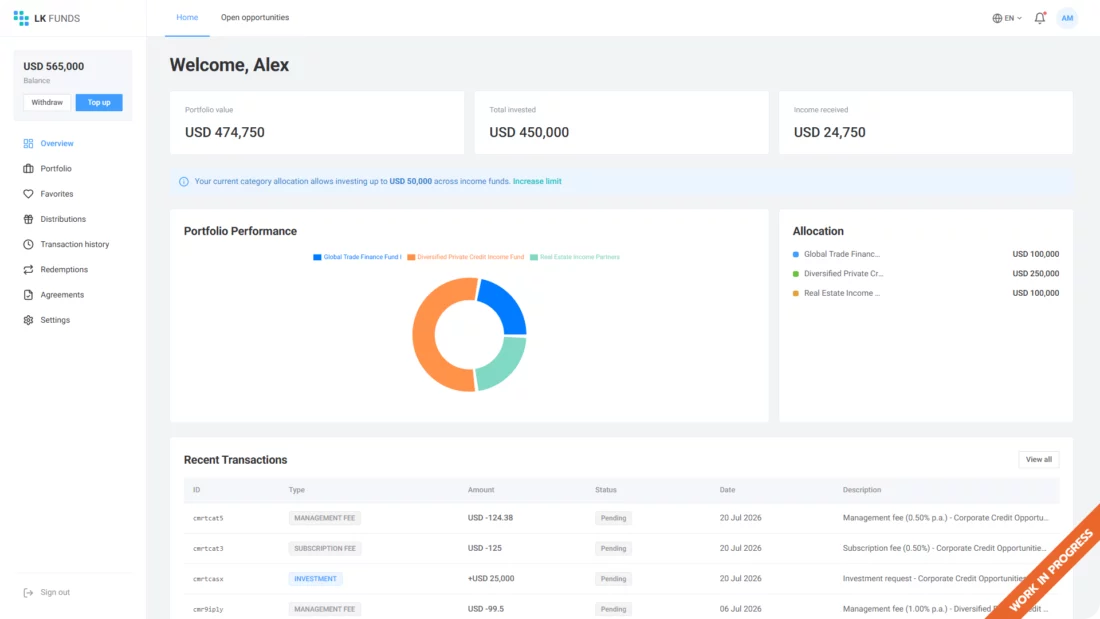
Investment management software by LenderKit
Every investor must complete identity verification before investing in the fund. A modern platform should support digital onboarding with built-in KYC and AML checks, sanctions and PEP screening, beneficial ownership verification, and ongoing monitoring.
Subscription and redemption processing
Once investors are onboarded, the platform should manage the entire investment lifecycle, from receiving subscription requests and reconciling incoming payments to issuing fund shares and updating investor records. It should also process redemption requests efficiently while maintaining accurate balances and supporting settlement with custodians and payment providers.
Automating these workflows reduces manual work and helps minimize operational errors.
Fund accounting and NAV calculation
Fund accounting is one of the most important operational functions. The platform should maintain investor records, track cash movements, record portfolio transactions, and calculate the fund’s Net Asset Value (NAV)7 on a daily basis.
An integrated accounting module ensures that subscriptions, redemptions, portfolio valuations, and accounting records remain synchronized, reducing reconciliation efforts and improving reporting accuracy.
Liquidity monitoring and compliance
Money market funds must continuously monitor liquidity and portfolio risk to comply with regulatory requirements. A comprehensive administration platform should provide real-time visibility into key metrics such as daily and weekly liquid assets, weighted average maturity (WAM), weighted average life (WAL), credit quality, and portfolio concentration limits.
Compliance dashboards and automated alerts make it easier to identify potential issues before they become regulatory concerns.
Investor reporting and self-service
Investors increasingly expect digital access to their accounts. Secure investor portals allow them to complete onboarding, subscribe to or redeem fund shares, monitor their holdings, download statements, and access tax documents without relying on manual communication.
For fund managers, self-service portals also reduce administrative workload while improving the overall investor experience.
Workflow automation and integrations
Efficient fund administration depends on seamless data exchange between multiple parties, including custodians, banks, payment providers, identity verification services, and accounting systems.
Launching a money market fund with LenderKit
Running a modern money market fund requires a balancing act between continuous liquidity, strict regulatory compliance, and high transaction volumes. Relying on legacy systems or manual workflows creates operational drag and risks error.
LenderKit offers an all-in-one, white-label investment platform designed to handle the heavy lifting:
- Streamlined investor onboarding, according to KYC/AML standards
- Capital raising tools and management
- Debt, equity and donation support
- Transactions monitoring, reporting, compliance and more
Ready to take your MMF operations to the next level? Reach out to us to schedule a platform demo or discuss your fund’s custom requirements.

Article sources:
- Money Market Funds | Charles Schwab
- FDIC: Federal Deposit Insurance Corporation
- PDF (https://www.sec.gov/files/rules/final/2014/33-9616.pdf)
- What Are Money Market Funds | Fidelity.com
- Money Markets | What They Are and How They Work
- PDF (https://www.federalreserve.gov/newsevents/rr-commpublic/ici_meeting_20110104.pdf)
- Investopedia - NAV