Indonesia P2P Lending Market Overview for Platform Owners


No time to read? Let AI give you a quick summary of this article.


Indonesia has one of Southeast Asia’s largest and fastest-growing digital lending markets. Its regulated P2P lending sector has expanded rapidly, with outstanding financing reaching IDR 105.14 trillion in June 2026, up 25.88%1 year on year. Its regulated peer-to-peer (P2P) lending sector is known as Layanan Pendanaan Bersama Berbasis Teknologi Informasi (Information Technology-Based Joint Funding Services) and is commonly referred to as Pindar (online lending). Now, it has become an important source of financing for consumers, micro and small businesses, and other underserved borrowers.
For platform owners, however, Indonesia is not a market where launching a lending app is enough. P2P lending is a regulated financial activity, and operators must meet requirements covering licensing, capital, credit risk, pricing, consumer protection, data security, governance, and reporting.
In this article, we will look at how the P2P lending market in Indonesia works, who regulates it, what limits and requirements apply to borrowers and platforms, and which established providers are active in the market. We will also cover the main risks and regulatory considerations that platform owners should understand before entering Indonesia.
What you will learn in this post:
How P2P lending works in Indonesia
The basic P2P lending model is straightforward. A borrower applies for financing through a digital platform, while lenders provide the funds. The platform operates as an intermediary, using technology to connect the two sides and manage the financing process.
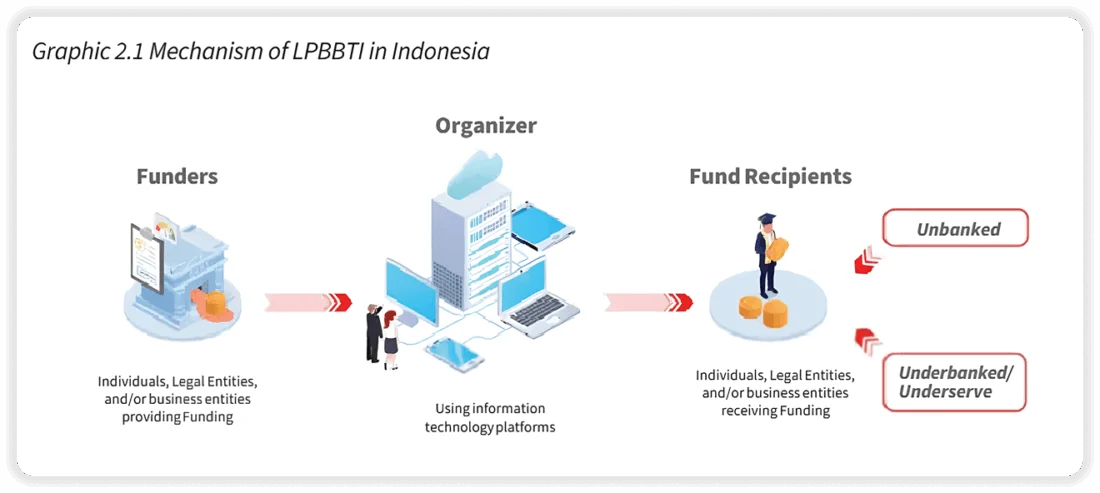
Indonesian platforms can serve different types of borrowers. Some focus on consumers, while others concentrate on MSMEs (micro, small, and medium-sized enterprises) or other forms of productive financing.
This creates opportunities for specialised platforms. A company could focus on working-capital financing for small businesses, consumer financing, supply-chain financing, or borrowers who have limited access to conventional bank credit.
Who regulates P2P lending in Indonesia?
The primary regulator is Otoritas Jasa Keuangan2 (Financial Services Authority of Indonesia), or OJK.
The current regulatory framework is principally based on POJK (OJK Regulation) No.3 40 of 20243 concerning Information Technology-Based Joint Funding Services. The regulation replaced the previous P2P lending framework and strengthened requirements related to governance, risk management, consumer protection, and the operation of lending platforms.
OJK also introduced the 2023–2028 Roadmap for the Development and Strengthening of LPBBTI4 (Information Technology-Based Joint Funding Services).
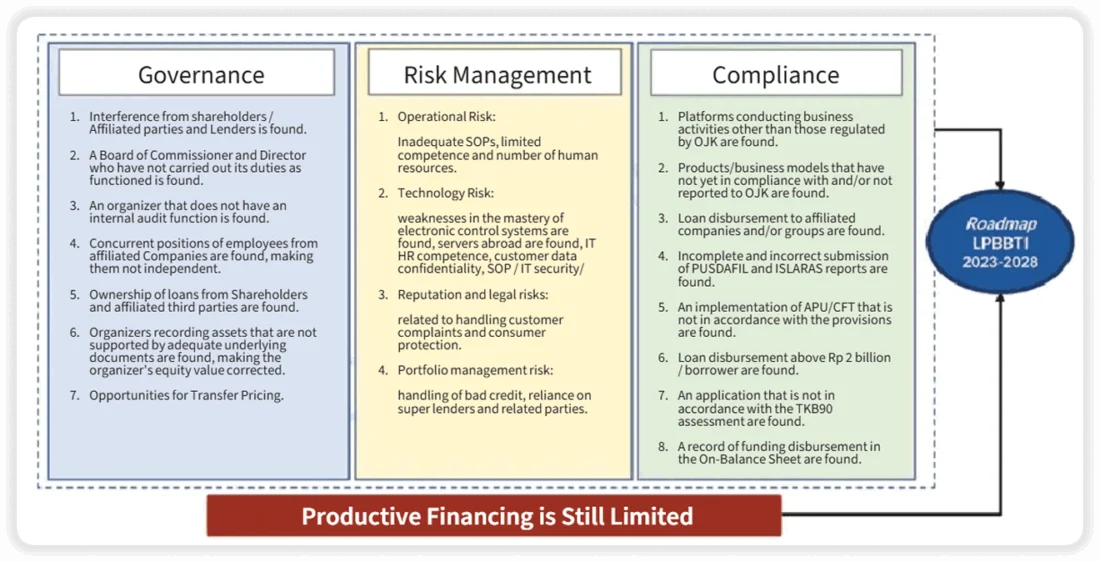
The roadmap is intended to support sustainable industry development while improving governance, risk management, consumer protection, and financial inclusion.
For a platform owner, this means that regulatory compliance needs to be considered from the beginning of product development. Licensing, corporate structure, capital requirements, technology, risk controls, customer protection, and reporting should be built into the business model rather than added after the platform has been launched.
A company cannot simply launch an Indonesian P2P lending platform and begin connecting borrowers and lenders. P2P lending is a regulated financial service, and operators must obtain an OJK licence and comply with requirements covering capital, governance, risk management, technology, credit assessment, consumer protection, reporting, and other aspects of their operations. OJK Regulation No. 40/20245, which took effect on 27 December 2024, is the main current regulation governing Information Technology-Based Joint Funding Services (LPBBTI).
The operator must be established in an eligible legal form. POJK No. 40/2024 provides for LPBBTI operators to be organised as either a limited liability company or a cooperative. The regulation also sets requirements for their business activities, risk mitigation, governance, and ongoing supervision.
Capital is one of the most significant barriers to entry. Under the regulatory framework, the required minimum paid-up capital is IDR 25 billion. In addition, an operator must maintain minimum equity of IDR 12.5 billion at all times. The OJK roadmap explains that these higher capital and equity requirements were introduced to address capital shortfalls and strengthen the industry’s resilience.
The capital requirements have also contributed to consolidation6. More recent industry reporting shows that some licensed operators have faced difficulties meeting the IDR 12.5 billion minimum equity requirement, while the market has undergone exits and restructuring.
Licensing is therefore only the starting point. Operators must also build systems that support credit assessment, identity verification, risk mitigation, consumer protection, data security, reporting, and ongoing regulatory compliance. OJK requires operators to conduct analysis of prospective borrowers and verify user identities and supporting documents as part of their risk-mitigation processes.
Financing limits
OJK also places limits on how much financing a borrower can receive.
Under POJK No. 40/2024, the general maximum financing amount for one borrower is IDR 2 billion, covering both consumer and productive financing. A platform can provide up to IDR 5 billion in productive financing when additional conditions are satisfied. In particular, the platform must have a maximum 5% level of financing in default over the preceding six months and must not be subject to an OJK sanction restricting or suspending its business activities.
Borrowers are also restricted in the number of P2P lending platforms through which they can receive financing. OJK requires a platform to ensure that a borrower does not receive financing from more than three LPBBTI providers, including the platform itself. The rule is designed to limit excessive borrowing across multiple platforms and requires operators to consider a borrower’s wider financing exposure when assessing repayment capacity.
This has direct implications for platform design. A credit-scoring system should not assess an application in isolation. The operator needs processes for checking relevant borrower information and assessing existing obligations, repayment capacity, and overall credit exposure.
There are additional borrower requirements that platform owners need to build into their onboarding processes. Under the current framework, borrowers must be at least 18 years old7 or married, while the minimum income requirement is IDR 3 million per month. OJK has provided a transition period for these criteria, with compliance for new borrower acquisition and renewals required no later than 1 January 2027.
Pricing and late-payment limits
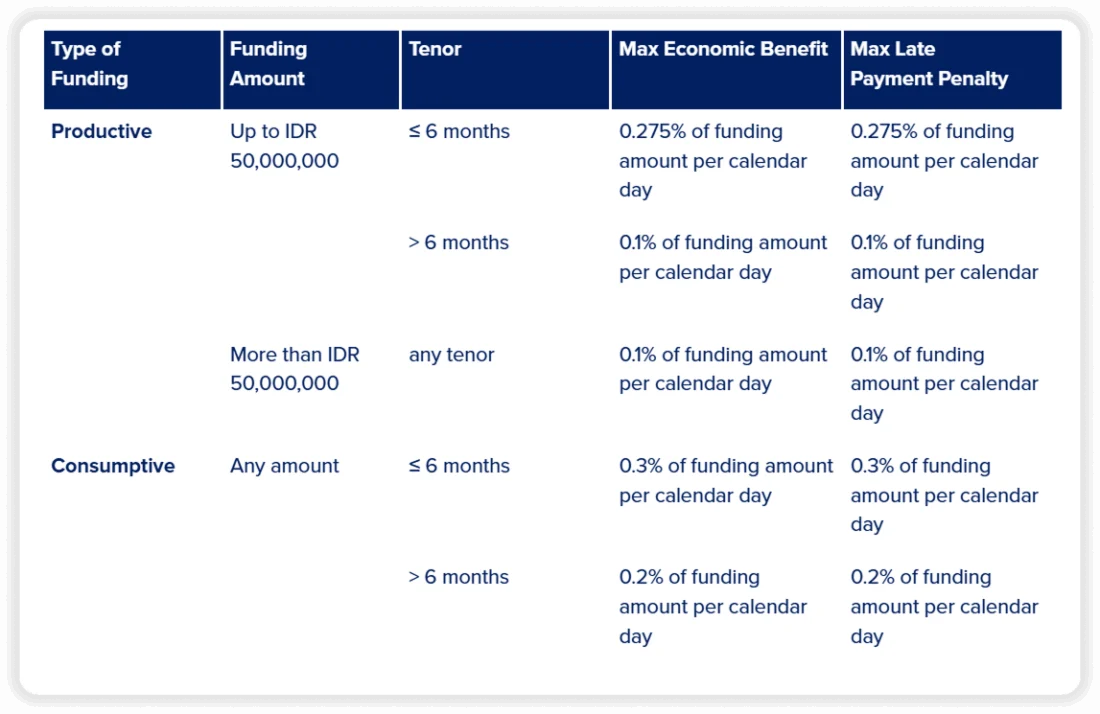
Platform owners also have limited freedom when setting financing terms. OJK sets maximum limits on the economic benefits that can be charged. These benefits cover more than interest. They can include interest, margin or profit sharing, administration fees, commissions, platform fees, and other applicable costs.
The limits depend on the type and duration of financing. For consumer financing, the maximum economic benefit is 0.1% per day from 1 January 2026.
Productive financing follows a more detailed structure under SEOJK No. 19/SEOJK.06/2025, which took effect on 31 July 2025. For micro and ultra-micro businesses, the maximum is 0.275% per day for financing with a tenor of up to six months and 0.1% per day for financing with a tenor of more than six months. For small and medium-sized businesses, the maximum is 0.1% per day, regardless of tenor.
Late-payment charges are also subject to limits. In addition, the combined amount of economic benefits and late-payment charges cannot exceed 100% of the original financing amount stated in the agreement.
For platform owners, this means pricing rules need to be built into the platform from the start. The system should automatically calculate and monitor interest or other economic benefits, fees, late-payment charges, borrower eligibility, and applicable limits. This helps ensure that the platform does not offer financing terms outside the permitted regulatory framework.
Examples of Indonesian P2P platforms
Indonesia has developed several different P2P lending models.
Modalku
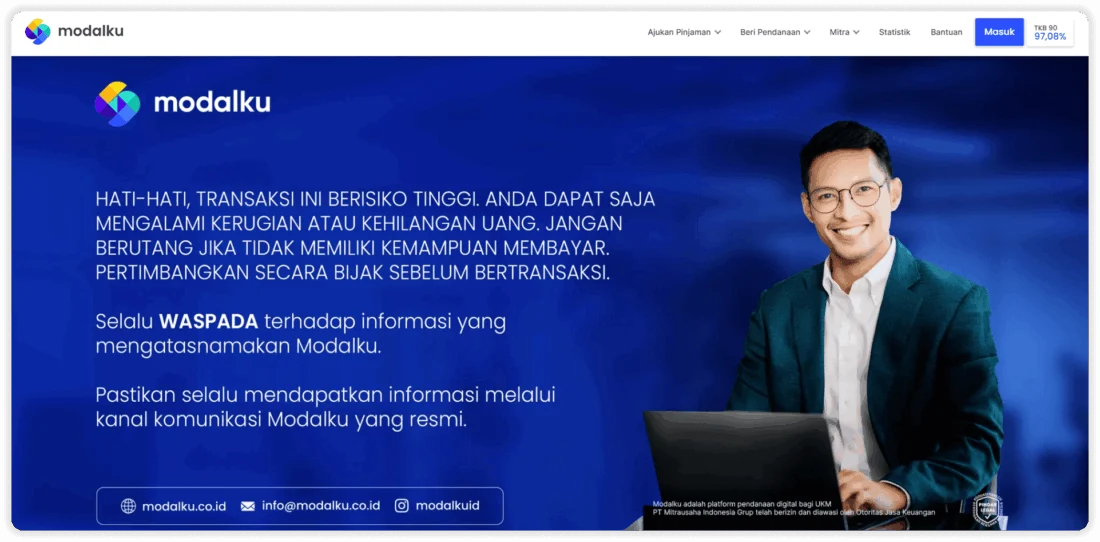
Modalku8 is focused primarily on business financing and MSMEs (micro, small, and medium-sized enterprises). It is part of the regional Funding Societies group and is an example of a platform specialising in productive financing.
Amartha
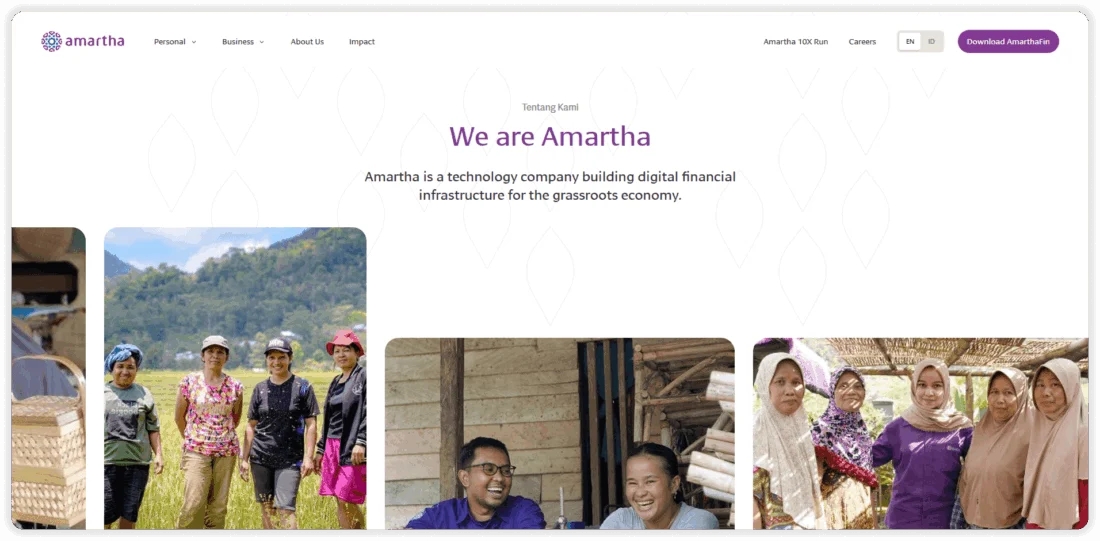
Amartha9 focuses on microfinance and underserved entrepreneurs. Its model demonstrates how digital lending can be combined with specialised microfinance operations to reach borrowers outside traditional banking channels.
Kredit Pintar
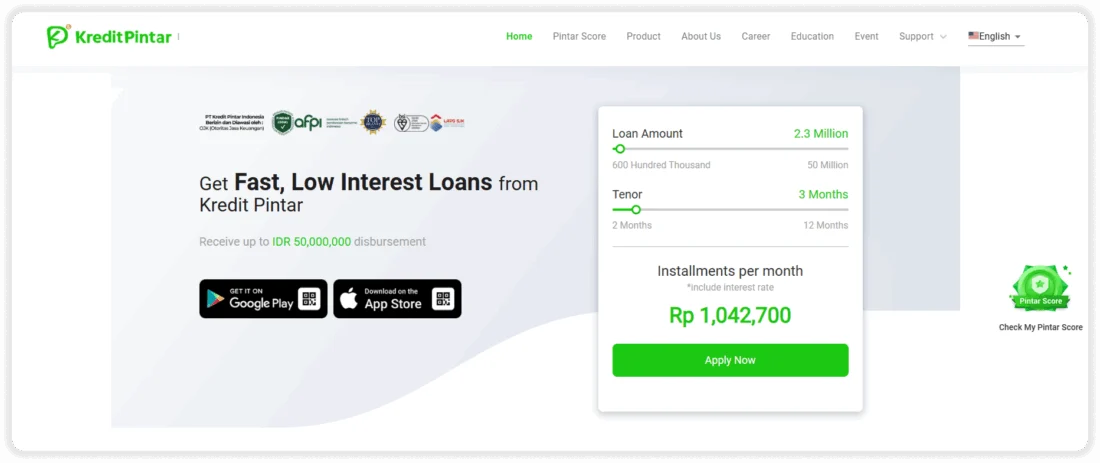
Kredit Pintar10 is an example of a consumer-focused digital lender. Its business model uses technology and data analysis to support credit assessment and fraud prevention.
KoinP2P
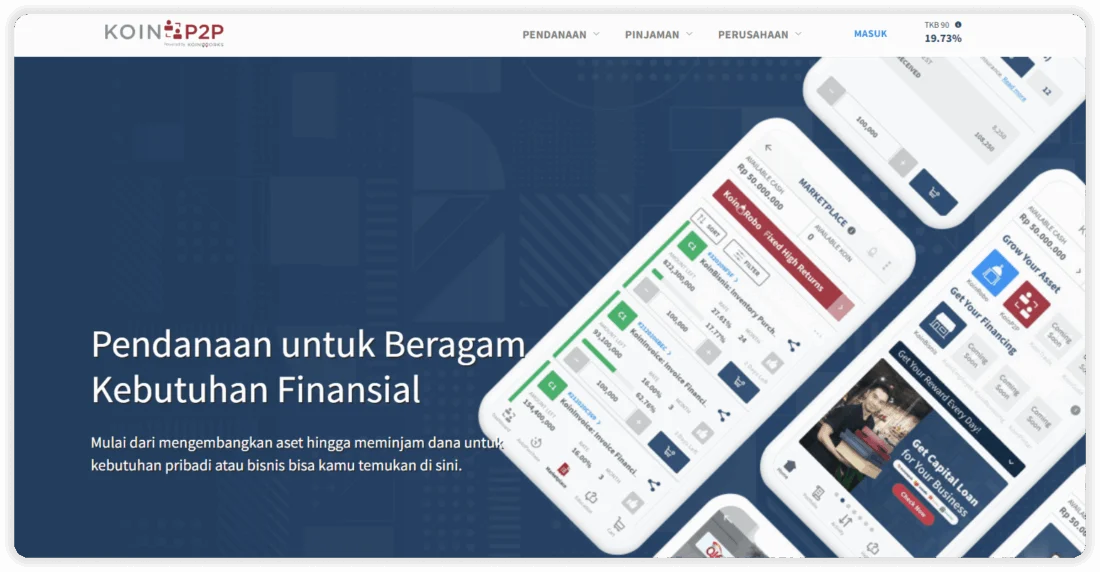
Koin P2P11 is another established name in the Indonesian market. Its recent regulatory situation also illustrates why governance and operational resilience are important. In 2026, OJK stated that it was intensively supervising the company and requiring shareholders to ensure that its operations and obligations to lenders continued to be addressed.
These examples show that platform owners do not necessarily need to compete across the entire lending market. A clearly defined lending segment can provide a more practical starting point.
Main risks and considerations for platform owners
Indonesia’s P2P lending market presents several risks beyond licensing. Credit risk is a major concern, with TWP90, a key OJK indicator used to measure financing overdue by more than 90 days, reaching 4.33% in November 2025, up from 2.52% a year earlier. Strong underwriting, borrower verification, fraud controls, and repayment monitoring are therefore essential. Platforms must also address consumer protection, data security, and regulatory compliance, particularly given concerns around illegal lending, abusive collection practices, excessive charges, misleading marketing, and misuse of personal data.
How to launch a P2P lending platform in Indonesia with LenderKit
Launching a P2P lending platform in Indonesia requires more than developing a lending app. Platform owners need to combine a suitable business model with the required licensing, capital, risk management, borrower verification, pricing controls, consumer protection, and reporting processes.
This is where white-label software, such as the one offered by LenderKit, can help reduce the technology development workload. Instead of building the core platform from scratch, businesses can use LenderKit as a foundation for developing a marketplace lending platform and adapt it to their specific business model and operational requirements.
LenderKit can support the core functionality needed to operate a lending marketplace, including borrower and lender management, loan listings, financing workflows, payments, dashboards, and platform administration. This gives the business a technology foundation that can be configured around its target lending segment and operating model.
To see how the product works or discuss options, get in touch with our team.
Article sources:
- Scary! Indonesian People's Loan Debt by June 2026 Reaches Rp105 Trillion
- GFIN
- Comprehending OJK Regulation No. 40 of 2024: A Step Toward Stronger Supervision and Governance in Fintech Lending
- LPBBTI Development Roadmap 2023-2028 | PDF | Loans | Economies
- Indonesia amends peer-to-peer lending services framework : Allen & Gledhill
- Indonesia's Online Lending Market Consolidates - Fintech News Indonesia
- Strengthening standards for Indonesia's P2P lending industry | HBT
- Modalku | Pinjaman Tanpa Agunan & Modal Usaha Online
- About Amartha: Fintech for MSME Financing | Amartha.com
- Apply for Easy & Quick Cash Loans Online | KreditPintar
- KoinP2P | Pionir Peer to Peer (P2P) Lending Indonesia