Fractional Aviation Ownership Explained: How Asset Managers Are Digitizing Jet Syndications


No time to read? Let AI give you a quick summary of this article.


Business aviation is expensive to own and operate. Traditionally, a company, family office, or private owner would purchase an aircraft outright and take responsibility for the capital and operating costs.
Fractional aviation changes this model. Companies, HNWIs, family offices, corporate flight departments, and other investors can share ownership of an aircraft through defined interests instead of funding the entire asset.
This shift from whole-aircraft ownership to fractional investment creates new opportunities for both investors and asset managers. In this article, we’ll explore how fractional aviation ownership works, what sponsors need to consider when structuring these deals, and how digital investment software can support the entire investment lifecycle.
What you will learn in this post:
What is fractional ownership in aviation?
Fractional ownership in aviation means that several parties share ownership of an aircraft. Traditional programs can offer interests ranging from 1/16 to larger shares such as 1/8, 1/4, or 1/21. The ownership interest generally determines the owner’s contracted access or flight hours, depending on the program agreement.
In the US, qualifying fractional ownership programs operate under 14 CFR Part 91 Subpart K2. The FAA establishes regulatory definitions and safety standards for these programs, including requirements to program management, aircraft, ownership interests, and agreements between fractional owners.
For an investment-focused structure, investors can hold defined fractional interests in an aircraft through an appropriate ownership structure.
The model can work for different types of participants. A corporate flight department may want access to a private jet without purchasing the entire aircraft. An HNWI or family office may want exposure to a high-value aviation asset. An asset manager can structure and manage the fractional ownership opportunity for multiple investors.
How fractional aviation works as an investment
An asset manager can establish the ownership structure, acquire the aircraft, and offer fractional interests to eligible investors.
The first step is to define what investors actually receive and how the investment will work.
The structure may use an aircraft-owning company or another legal entity. The investment documents can set out each investor’s ownership rights, responsibilities, costs, distributions, voting rights, transfer rules, and exit options.
Securities rules depend on the jurisdiction and how the investment is structured. In the US, some private offerings may rely on Regulation D exemptions3, including Rule 506(b) or Rule 506(c), if they meet the applicable requirements. Rule 506(b)4 generally does not allow public solicitation, while Rule 506(c)5 allows it if all investors are accredited and their status is properly verified.
Legal and regulatory advisers should determine the appropriate structure before the offering is launched. The financial model should give investors a clear picture of how the aircraft investment works. It can cover the purchase price, financing, operating costs, expected aircraft use, distributions, valuation, and potential resale value.
Equity vs. debt financing
Aircraft investments can be financed through equity, debt, or a combination of both. The main difference6 is what the investor receives in return for providing capital.
With equity financing, investors buy an ownership interest in the company that owns the aircraft. Their return depends on how the investment performs. They may receive a share of income generated by the aircraft and may also benefit if the aircraft increases in value and is sold. The investment agreement sets out how profits, costs, voting rights, and the proceeds from a future sale are divided.
With debt financing, investors do not own part of the aircraft. Instead, they lend money to the aircraft-owning company. The company agrees to repay the principal, usually with interest, according to a defined schedule. The investor’s return is based mainly on the agreed interest and repayment terms rather than the aircraft’s future value.
A deal can also combine debt and equity. For example, a sponsor could use a bank loan to finance part of an aircraft purchase and raise the remaining capital from investors through equity. The debt reduces the amount of equity the sponsor needs to raise, while equity investors retain an ownership interest in the aircraft-owning company.
What does fractional aircraft ownership cost?
Buying an aircraft is only part of the cost. Owners also pay for crew, training, insurance, hangar space, management, fuel, maintenance, and engine reserves.
These costs can be significant. For example, CRAFT’s 20267 estimates put annual costs at about $642,000 for a light jet and at $3.49 million for a large jet.
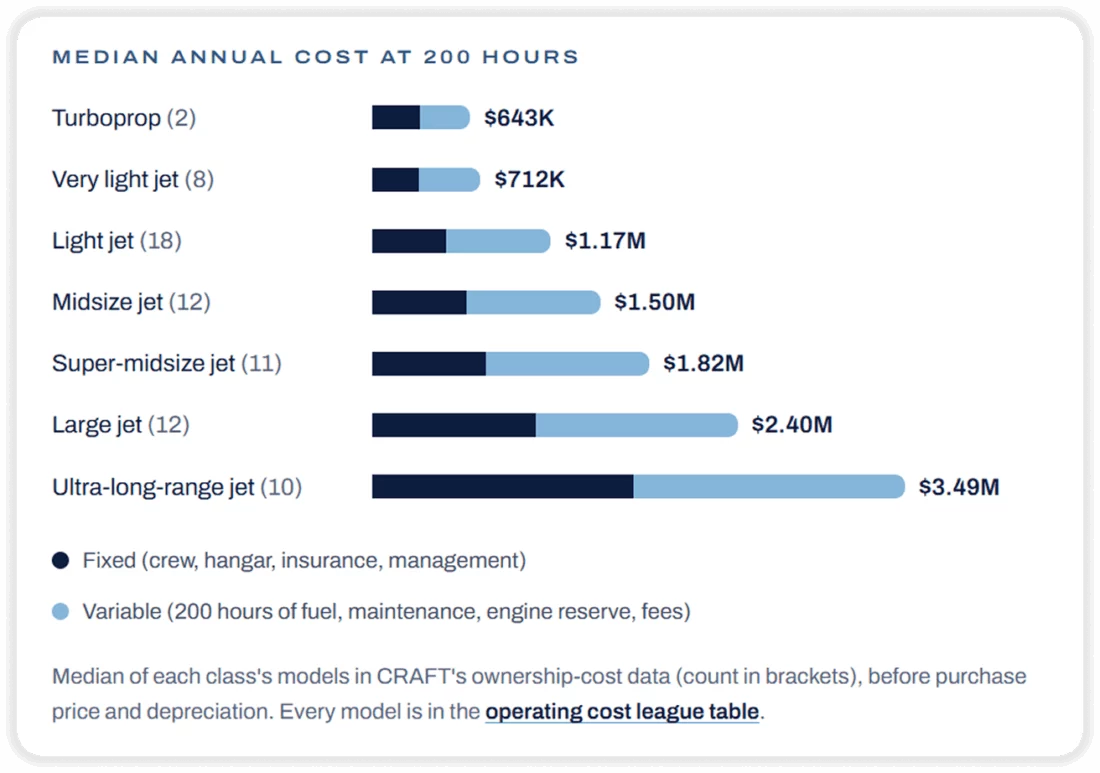
With fractional ownership, these costs can be allocated among owners according to their interests and the terms of the ownership agreement.
The aircraft’s future value also matters. When it is sold, the resale price can affect investors’ overall return. Aircraft age, flight hours, maintenance history, engine condition, upgrades, and market demand can all affect that value. For this reason, a fractional aviation investment needs a clear financial model covering both ongoing costs and the eventual exit.
Managing investors in business aviation fractional ownership
Business aviation fractional ownership is not only about dividing an aircraft into shares. It also means managing relationships with multiple investors.
An asset manager may work with HNWIs, family offices, corporate investors, or other eligible participants. Each investor may need access to information about their ownership interest and the underlying aircraft.
Managing this information through spreadsheets, email, and separate document systems can become difficult as the investor base grows. A digital investment platform brings these processes into one place:
- Investor onboarding: Investors can register, complete required checks, review documents, sign agreements, and make their capital contributions online.
- Ownership management: The platform can maintain records of fractional interests, investor allocations, ownership changes, and transfers where permitted.
- Deal management: Asset managers can present aircraft opportunities, collect investor commitments, manage documents, and track each investment from launch through closing.
- Distributions and reporting: The platform can support distribution workflows and provide investors with financial and asset-level reports.
- Investor communications: Instead of managing updates through separate email threads, asset managers can give investors a central place to receive documents, notices, reports, and other information.
Investors get a dedicated online portal, while the asset manager gets a central system for managing investor relations and fractional ownership. For managers offering several aircraft, this infrastructure is even more important. The goal is to create a repeatable process rather than build a separate system for every fractional aviation opportunity.
Fractional aviation ownership platforms
Here are some examples of platforms that show different approaches to fractional aircraft ownership – investment participation, managed co-ownership, and digital ownership infrastructure.
AVIONA: Private jet investment platform

AVIONA8 combines fractional private jet ownership with an investment model. Investors can participate in aircraft through different investment classes, receive distributions, and access a secure portal for subscriptions; the platform also supports fiat and stablecoin payments.
FA Jets: Aircraft co-investment
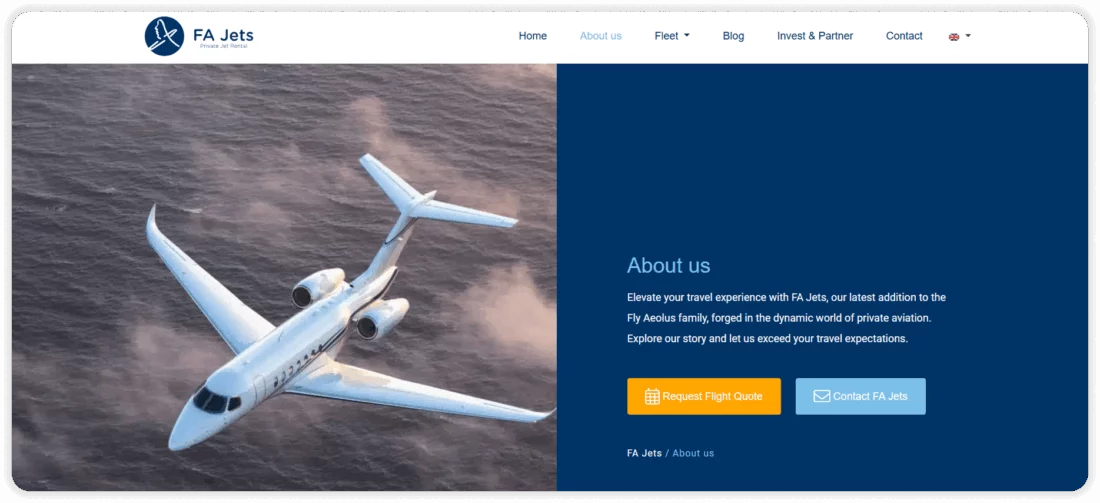
FA Jets9 offers investors the opportunity to participate in an aircraft through a holding company that acquires and manages it. Participants receive flight hours, priority access, and a share of the aircraft’s residual value when it is sold, with participation starting from €250,000 according to the company.
FlightLine: Digital co-ownership
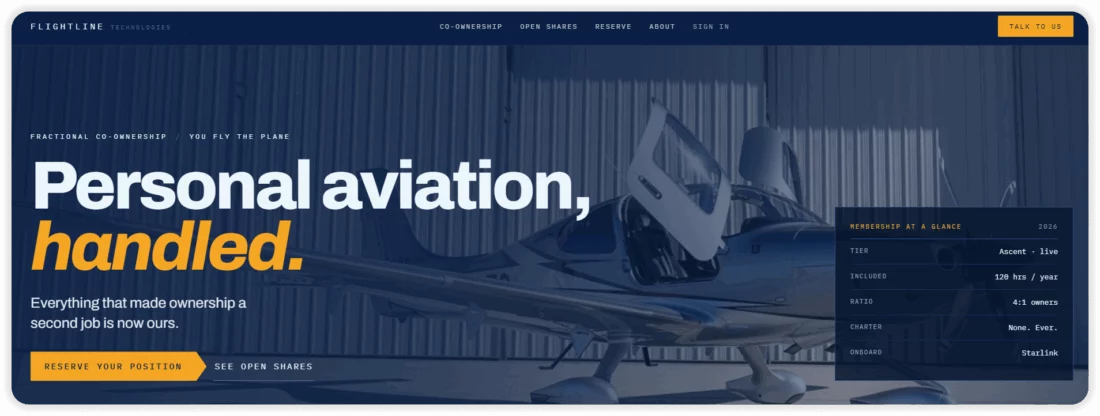
FlightLine10 focuses on fractional co-ownership of specific aircraft rather than investment fundraising. It structures ownership, handles scheduling, maintenance coordination, records, and financial reporting through a digital platform.
How to build a fractional investment platform with LenderKit
Building investment software from scratch can be expensive and time-consuming. This is where LenderKit’s white-label software can help.
LenderKit provides white-label investment software for asset managers, investment businesses, and crowdfunding platforms. The platform can be configured for different investment models, including fractional ownership, and can support investor onboarding, deal management, portfolio administration, distributions, reporting, and other investment workflows.
This infrastructure can help asset managers move from individual aircraft syndications to a repeatable fractional investment business. It also gives investors a central place to access their investments, documents, reports, and other information.
If you are planning a digital platform for fractional aviation ownership, contact our team to discuss your investment model and technology requirements.

Article sources:
- Fractional Shares Explained: Picking the Right Size | CRAFT
- 14 CFR Part 91, Subpart K (Part 91K) Fractional Ownership Program Application Approval Process | Federal Aviation Administration
- SEC.gov | Exempt Offerings
- SEC.gov | Private Placements - Rule 506(b)
- General solicitation — Rule 506(c)
- PDF (https://www.sec.gov/files/ib_corporatebonds.pdf)
- Private Jet Operating Costs: Every Model Ranked (2026)
- AVIONA — Own a Private Jet from US$16,000
- Aircraft Co-Investment & AOC Charter Management | FA Jets
- FlightLine | Fractional Aircraft Co-Ownership for Owner-Pilots