Investors Want Diversified Asset Baskets, Not Single-Company Bets – FINRA Private Placement Report Analysis


No time to read? Let AI give you a quick summary of this article.


In June 2026, FINRA launched a dedicated Private Placement Information Page1 to help broker-dealers navigate filing, disclosure, and due diligence requirements. The move reflects the rapid growth of private markets and the increasing demand for private investment opportunities.
One of the most interesting aspects of FINRA’s guidance is its focus on due diligence. Firms are expected to thoroughly investigate issuers, management teams, business prospects, assets, offering claims, and the intended use of investor funds before recommending private placements.
FINRA also draws attention to pre-IPO funds, which give investors exposure to a portfolio of private companies rather than a single issuer. These diversified vehicles have become common enough to warrant specific regulatory scrutiny, suggesting that pooled investment structures are playing a larger role in private markets.
But does this mean investors are moving away from single-company investments in favor of diversified asset baskets?
In this article, we’ll examine what FINRA’s new initiative tells us about investor preferences, explore the growing popularity of pooled investment vehicles, and look at real-world examples of firms expanding their diversified private-market offerings.

What you will learn in this post:
The numbers tell a clear story
The strongest evidence comes directly from FINRA’s own filing data.
According to FINRA’s analysis of private placement filings, there has been a noticeable shift in the types of offerings reaching investors. In 2023, Fund Issuers represented 25% of private placement filings. By 2025, that figure had grown to 32%.
At the same time, Operating Companies (investments tied to a single business) declined from 28% to just 21%.
This is an important shift. Fund issuers are pooled investment vehicles. Rather than investing in one company, investors gain exposure to a portfolio of assets managed under a single structure. Operating companies, by contrast, represent traditional single-company investment opportunities. So, the share of diversified investment products is growing while the share of individual company offerings is shrinking.
Diversification now dominates private placements
The trend becomes even more impressive if we look at the broader private placement market.
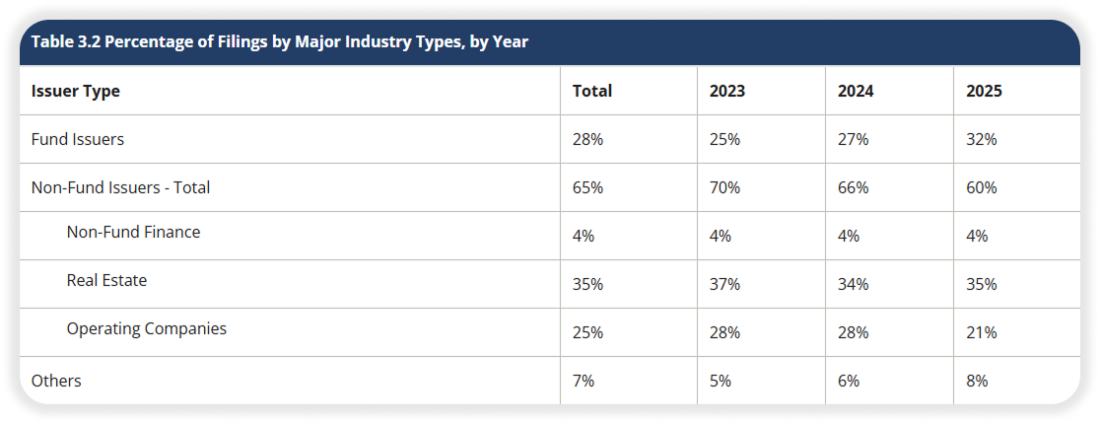
FINRA’s data shows that in 2025:
- Fund Issuers accounted for 32% of filings.
- Real Estate Syndications and Pools accounted for 35% of filings.
Combined, these pooled investment structures represent approximately 67% of all retail private placement filings.
Single-company operating businesses account for only 21%.
That means diversified investment vehicles now represent roughly two-thirds of the market, while direct investments in individual businesses make up a much smaller share.
For investors, the message is clear: diversification is becoming the preferred approach.
Why investors are choosing asset baskets
The appeal of diversified investments is easy to understand. Private companies can generate substantial returns, but they also carry significant risks. Many startups fail2, and others take years to generate liquidity events. Information is often limited compared to public markets, making due diligence more difficult.
By investing through a fund or pooled vehicle, investors can spread risk across multiple companies, industries, or projects. Instead of relying on one company to succeed, investors gain exposure to an entire portfolio. For many investors, particularly those entering private markets for the first time, this approach is far more attractive than trying to identify the next unicorn startup on their own.
Real-world examples of the shift toward diversification
Several major crowdfunding and investment platforms have actively shifted toward pooled investment structures because investors demanded more diversification. Here are some companies that have done it.
Wefunder: From startup picking to community funds
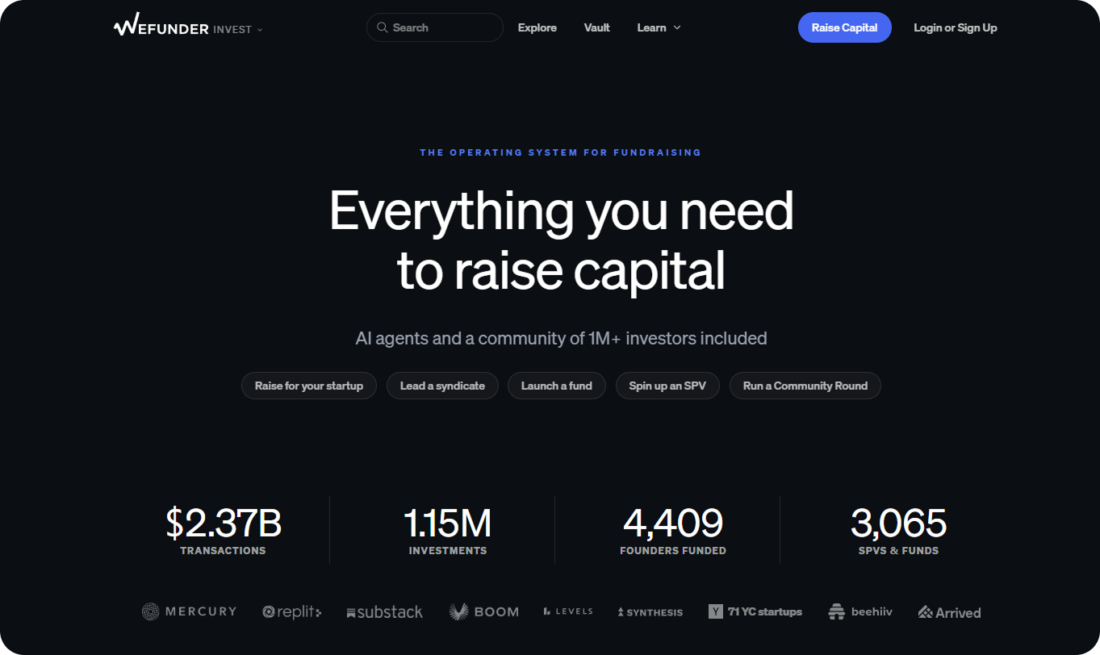
Wefunder3 built its reputation by allowing investors to back individual startups.
Over time, however, the platform introduced Wefunder Syndicates and Funds, as well as community investment vehicles, that allow investors to participate in curated portfolios rather than selecting companies one by one.
Instead of making multiple separate investments, users can gain exposure to a basket of startups managed by experienced investors and syndicate leaders.
The minimum investment on the platform starts with $100 for most community rounds, but some offerings may set higher limits.
Fundrise: The diversification pioneer
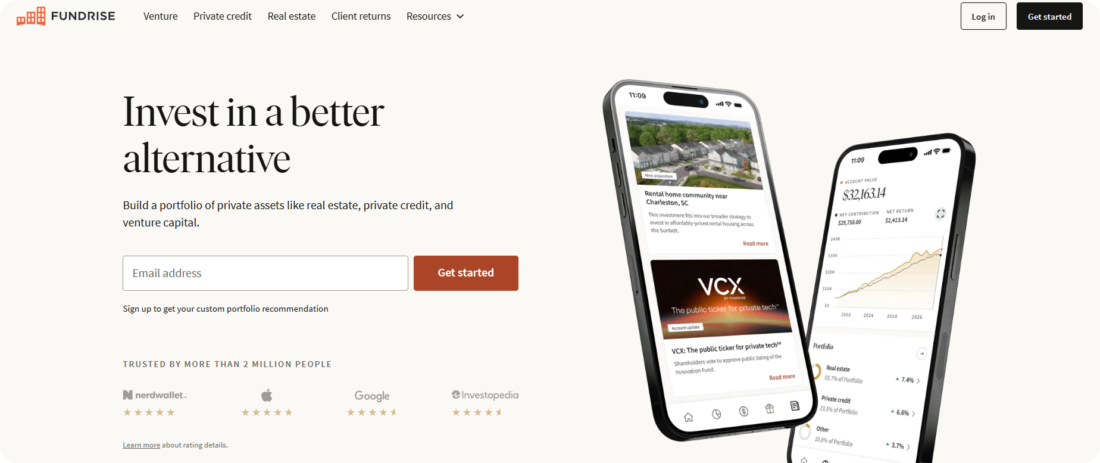
Fundrise4 provides one of the clearest examples of investor preferences shifting toward pooled investments.
The company originally focused on individual real estate projects. Investors could select specific properties and developments. Over time, Fundrise transitioned toward diversified eREITs and large pooled funds.
Today, many investors simply allocate capital to vehicles such as the Flagship Real Estate Fund5 or Innovation Fund6, where investments are automatically spread across numerous assets.
For a standard taxable account, the minimum investment is just $10, and for a retirement account, it is $1,000.
Republic: Bringing institutional-style investing to retail investors
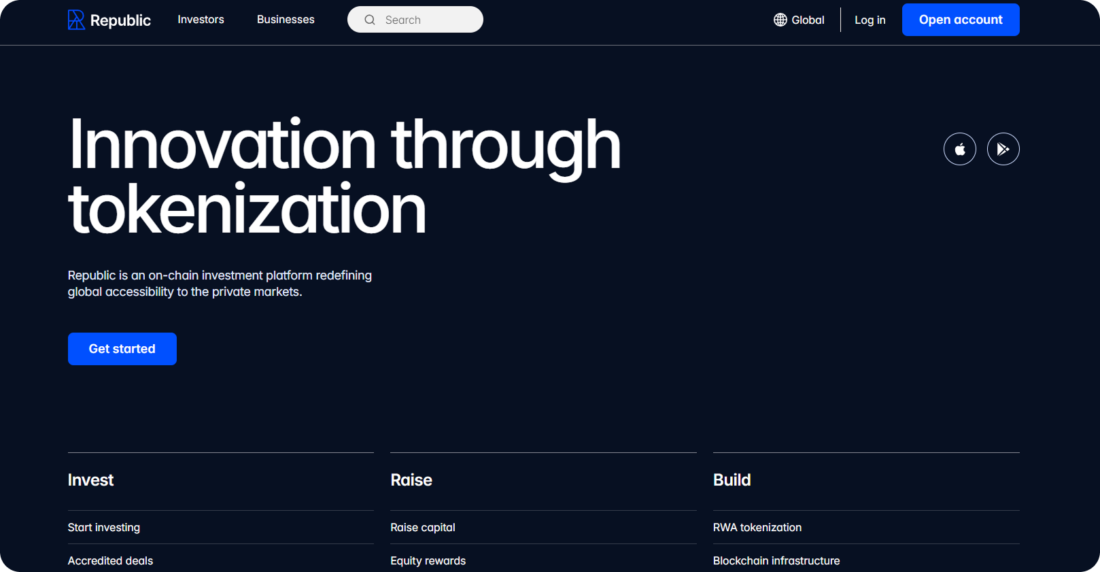
Republic began as a traditional equity crowdfunding platform focused on individual startup investments.
It has since expanded into specialized investment funds and curated portfolios that provide diversified exposure across multiple companies and sectors.
Rather than evaluating every startup independently, investors can access professionally managed portfolios designed to spread risk and improve access to opportunities. The minimum investment for startup crowdfunding campaigns is $50. For Private Deal Room and certain accredited investor offerings, the minimum to invest is $5,000.
Does it mean that single-company investing is dead?
No, it isn’t. Direct investments in private companies continue to play an important role in venture capital, angel investing, and private fundraising.
Some investors actively look for concentrated positions because they offer the potential for outsized returns, even though risks are much higher. Many of the most successful private investments in history came from early investors who backed a company before it became a market leader.
For example, the investment of Peter Thiel in Facebook ($500,000, a 10.2% stake of the company) generated for him more than $1 bln of income7. Another example is the investment of Sequoia Capital in WhatsApp8. When Facebook bought WhatsApp for $19 bln, it became the largest-ever purchase of a VC-backed company, and it generated billions of dollars in profit for Sequoia.
However, FINRA’s data suggests these concentrated bets are becoming a smaller part of the overall private placement landscape.
The market is not abandoning single-company investments. Instead, it is increasingly complementing them with diversified structures that reduce risk and simplify access.
Looking for a ready-made solution or exloring a custom build?
Here's how we can help
How to launch an investment platform with LenderKit
As private markets become more accessible, platforms that offer fund-based investments, syndications, and diversified asset baskets are attracting growing demand from both retail and accredited investors.
For businesses looking to capitalize on this trend, launching an investment platform no longer requires building complex infrastructure from scratch. LenderKit provides white-label investment software for crowdfunding platforms, private funds, real estate investment marketplaces, syndications, and alternative investment platforms. It has built-in tools for investors onboarding, compliance, payments, deal management, and reporting.
Whether you’re launching a venture fund, a real estate investment platform, or a private-market marketplace, LenderKit can help you get to market faster. Contact the LenderKit team to discuss your project and discover how our software can support your investment platform goals.